In 1995, as a high school student, I read the first edition of Joan Ryan's book "Little Girls in Pretty Boxes". I picked it up because I figure skated for many years (from age 2-14). Little did I know that I was starting my first exploration into public health.
The book examined public health issues like eating disorders and sports injuries. It argued for policies that would protect young figure skaters and gymnasts from injury and from exploitation by their coaches, families, and industry. Ryan conducted intensive interviews for the book, which allowed her to highlight several cases like that of Christy Henrich. Henrich was a talented and promising U.S. gymnast who died from anorexia at the age of twenty-two.
I thought of this book today when I read a beautiful and honest blog post by Jennifer Kirk called, "An Unrealized Dream". Jennifer Kirk is a decorated, elite U.S. figure skater who retired from competitive skating in August 2005. She retired in order to focus on her health and to recover from bulimia, alcoholism, and cutting. Her post highlights the complexities of these health problems. They were influenced by her sport, her family, her support system, her early independence, and the pressure that was put on her to have a successful career.
While some safeguards for elite skaters and gymnasts have been put in place since "Little Girls in Pretty Boxes" (e.g., the hotly debated minimum age standards for competition), we still have improvements to make. Jennifer talks about the strong influence of family and coaches regarding athlete safety and self esteem:
"A few months before I quit skating, my dad and coaches found out about my eating disorder, but nothing was done to get me the help I needed. This reinforced my belief that skating and my career held paramount importance over other aspects of my life."
Recently, much of the discussion of elite athlete safety has been focused on the National Football League (NFL), but the same questions are applicable here. Are athletes putting themselves at risk by playing with injuries (e.g., concussions)? What is the current organizational culture and does it support an intervention to protect athletes? Do the coaches and trainers really have the athletes' best interests at heart or are they focused on winning and protecting their investment?
What do you think? What more can we do to protect athletes at all levels (from recreational to elite)?
Wednesday, May 30, 2012
Monday, May 21, 2012
Rice consumption and health
Carbohydrate-rich foods lead to the formation of blood sugars after digestion (e.g., glucose, fructose), which are then used by the liver to synthesize liver glycogen. Liver glycogen is essentially liver-stored sugar, which is in turn used to meet the glucose needs of the human brain – about 5 g/h for the average person.
When one thinks of the carbohydrate content of foods, there are two measures that often come to mind: the glycemic index and the glycemic load. Of these two, the first, the glycemic index, tends to get a lot more attention. Some would argue that the glycemic load is a lot more important, and that rice, as consumed in Asia, may provide a good illustration of that importance.
A 100-g portion of cooked rice will typically deliver 28 g of carbohydrates, with zero fiber, and 3 g of protein. By comparison, a 100-g portion of white Italian bread will contain 54 g of carbohydrates, with 4 g of fiber, and 10 g of protein – the latter in the form of gluten. A 100-g portion of baked white potato will have 21 g of carbohydrates, with 2 g of fiber, and 2 g of protein.
As you can see above, the amount of carbohydrate per gram in white rice is about half that of white bread. One of the reasons is that the water content in rice, as usually consumed, is comparable to that in fruits. Not surprisingly, rice’s glycemic load is 15 (medium), which is half the glycemic load of 30 (high) of white Italian bread. These refer to 100-g portions. The glycemic load of 100 g of baked white potato is 10 (low).
The glycemic load of a portion of food allows for the estimation of how much that portion of food raises a person's blood glucose level; with one unit of glycemic load being equivalent to the blood glucose effect of consumption of one gram of glucose.
Two common denominators between hunter-gatherer groups that consume a lot of carbohydrates and Asian populations that also consume a lot of carbohydrates are that: (a) their carbohydrate consumption apparently has no negative health effects; and (b) they consume carbohydrates from relatively low glycemic load sources.
The carbohydrate-rich foods consumed by hunter-gatherers are predominantly fruits and starchy tubers. For various Asian populations, it is predominantly white rice. As noted above, the water content of white rice, as usually consumed by Asian populations, is comparable to that of fruits. It also happens to be similar to that of cooked starchy tubers.
An analysis of the China Study II dataset, previously discussed here, suggests that widespread replacement of rice with wheat flour may have been a major source of problems in China during the 1980s and beyond ().
Even though rice is an industrialized seed-based food, the difference between its glycemic load and those of most industrialized carbohydrate-rich foods is large (). This applies to rice as usually consumed – as a vehicle for moisture or sauces that would otherwise remain on the plate. White rice combines this utilitarian purpose with a very low anti-nutrient content.
It is often said that white rice’s nutrient content is very low, but this problem can be easily overcome – a topic for the next post.
(Source: Wikipedia)
When one thinks of the carbohydrate content of foods, there are two measures that often come to mind: the glycemic index and the glycemic load. Of these two, the first, the glycemic index, tends to get a lot more attention. Some would argue that the glycemic load is a lot more important, and that rice, as consumed in Asia, may provide a good illustration of that importance.
A 100-g portion of cooked rice will typically deliver 28 g of carbohydrates, with zero fiber, and 3 g of protein. By comparison, a 100-g portion of white Italian bread will contain 54 g of carbohydrates, with 4 g of fiber, and 10 g of protein – the latter in the form of gluten. A 100-g portion of baked white potato will have 21 g of carbohydrates, with 2 g of fiber, and 2 g of protein.
As you can see above, the amount of carbohydrate per gram in white rice is about half that of white bread. One of the reasons is that the water content in rice, as usually consumed, is comparable to that in fruits. Not surprisingly, rice’s glycemic load is 15 (medium), which is half the glycemic load of 30 (high) of white Italian bread. These refer to 100-g portions. The glycemic load of 100 g of baked white potato is 10 (low).
The glycemic load of a portion of food allows for the estimation of how much that portion of food raises a person's blood glucose level; with one unit of glycemic load being equivalent to the blood glucose effect of consumption of one gram of glucose.
Two common denominators between hunter-gatherer groups that consume a lot of carbohydrates and Asian populations that also consume a lot of carbohydrates are that: (a) their carbohydrate consumption apparently has no negative health effects; and (b) they consume carbohydrates from relatively low glycemic load sources.
The carbohydrate-rich foods consumed by hunter-gatherers are predominantly fruits and starchy tubers. For various Asian populations, it is predominantly white rice. As noted above, the water content of white rice, as usually consumed by Asian populations, is comparable to that of fruits. It also happens to be similar to that of cooked starchy tubers.
An analysis of the China Study II dataset, previously discussed here, suggests that widespread replacement of rice with wheat flour may have been a major source of problems in China during the 1980s and beyond ().
Even though rice is an industrialized seed-based food, the difference between its glycemic load and those of most industrialized carbohydrate-rich foods is large (). This applies to rice as usually consumed – as a vehicle for moisture or sauces that would otherwise remain on the plate. White rice combines this utilitarian purpose with a very low anti-nutrient content.
It is often said that white rice’s nutrient content is very low, but this problem can be easily overcome – a topic for the next post.
Labels:
carbohydrates,
glycemic index,
glycemic load,
glycogenesis,
refined carbs,
rice
Wednesday, May 9, 2012
So Who Else Caught the Brain Surgery on Twitter Today?
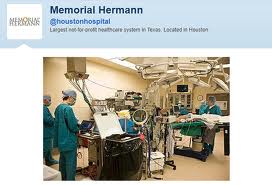
If you were on twitter today, you may have seen the hashtag #MHbrain. That stood for Memorial Hermann-Texas Medical Center in Houston (@houstonhospital). Today they live-tweeted a brain surgery which removed a cavernous angioma tumor from a 21-year-old female patient.
According to the hospital's press release, the goal of the "twittercast" was to (1) educate the public about brain tumors and (2) demystify brain surgery by giving a look inside an operating room. The surgeon, Dr. Dong Kim, added "Someone may have a loved one who is considering a similar procedure and perhaps they can glean some information from this twittercast that may help them make a decision about whether surgery is the right choice for them."
In authentic social media style, the hospital did not just send out information and images. They also had another neurosurgeon, Dr. Scott Shepard, serve as an online moderator who could respond to questions and comments from twitter followers in real time.
While there was much excitement over this event today, it is not the first time we have heard about surgeons tweeting from the operating room. Back in 2009, CNN picked up a story about surgeons at Henry Ford Hospital in Michigan tweeting the removal of a cancerous tumor from the kidney of a male patient. Just last February, Memorial Hermann was in the news for the first live tweeted open heart surgery.
A few thoughts on this trend:
How is Memorial Hermann evaluating their twittercast efforts?
According to the hospital's press release, the goal of the "twittercast" was to (1) educate the public about brain tumors and (2) demystify brain surgery by giving a look inside an operating room. The surgeon, Dr. Dong Kim, added "Someone may have a loved one who is considering a similar procedure and perhaps they can glean some information from this twittercast that may help them make a decision about whether surgery is the right choice for them."
In authentic social media style, the hospital did not just send out information and images. They also had another neurosurgeon, Dr. Scott Shepard, serve as an online moderator who could respond to questions and comments from twitter followers in real time.
While there was much excitement over this event today, it is not the first time we have heard about surgeons tweeting from the operating room. Back in 2009, CNN picked up a story about surgeons at Henry Ford Hospital in Michigan tweeting the removal of a cancerous tumor from the kidney of a male patient. Just last February, Memorial Hermann was in the news for the first live tweeted open heart surgery.
A few thoughts on this trend:
How is Memorial Hermann evaluating their twittercast efforts?
- Was this a huge marketing event or do they actually have health education goals?
- Are they simply looking at the numbers? For example, the number of twitter followers (up to 13,400 from 5,100 in the past 3 months). Or the number of visitors to Storify, a site which archives both the heart and brain surgeries.
- Are the demographics of twitter users reflective of their target audience?
- I would hope that they are thinking about how to evaluate the goals they explicitly laid out in their press release. How will they show that a twittercast can increase knowledge about brain tumors? How will they show that the public or potential patients have less anxiety about the procedure or choose it more often? As always, it is important to state goals (for any public health activity) that are measurable.
- I read an interesting blog post recently called, "Why social media may not be worth it for doctors." The author was concerned about already burned-out doctors trying to learn and make time for ever-changing technology...with no guarantee that the technology will give them "return on investment". Do the challenges outweigh the benefits?
- If physicians view themselves as "educators", how much value could twitter bring?
- Although the patient's name was protected and she gave permission for the twittercast, is it possible that any confidential information could be accidentally shared during the event?
- Although safeguards are in place, errors do happen in the operating room and throughout the hospital. With the additional staff/equipment (and possible distraction?) in the operating room to conduct the twittercast, could we face an increased risk of error?
What do you think?
Monday, May 7, 2012
The 2012 Arch Intern Med red meat-mortality study: The “protective” effect of smoking
In a previous post () I used WarpPLS () to analyze the model below, using data reported in a recent study looking at the relationship between red meat consumption and mortality. The model below shows the different paths through which smoking influences mortality, highlighted in red. The study was not about smoking, but data was collected on that variable; hence this post.
When one builds a model like the one above, and tests it with empirical data, the person does something similar to what a physicist would do. The model is a graphical representation of a complex equation, which embodies the beliefs of the modeler. WarpPLS builds the complex equation automatically for the user, who would otherwise have to write it down using mathematical symbols.
The results yielded by the complex equation, partly in the form of coefficients of association for direct relationships (the betas next to the arrows), have a meaning. Some may look odd, and require novel interpretations, much in the same way that odd results from an equation describing planetary motions may have led to the development of the theory of black holes.
Nothing is actually "proven" by the results. They are part of the long and painstaking process we call "research". To advance new knowledge, one needs a lot more than a single study. Darwin's theory of evolution is still being tested. Based on various tests and partial refutations, it has itself evolved a great deal since its original formulation.
One set of results that are generated based on the model above by WarpPLS, in addition to coefficients for direct relationships, are coefficients of association called "total effects". They aggregate all of the effects, via multiple paths, between each pair of variables. Below is a table of total effects, with the total effects of smoking on diabetes incidence and overall mortality highlighted in red.
As you can see, the total effects of smoking on diabetes incidence and overall mortality are negative, but small enough to be considered insignificant. This is interesting, because smoking is definitely not health-promoting. Among hunter-gatherers, who often smoke tobacco, it increases the incidence of various types of cancer (). And it may be at the source of many of the health problems suggested by analyses on the China Study II data ().
So what are these results telling us? They tell us that smoking has an intermediate protective effect, very likely associated with its anorexic effect. Smoking is an appetite suppressor. Its total effect on food intake is negative, and strong. As we can see from the table of total effects, just below the two numbers highlighted in red, the total effect of smoking on food intake is -0.356.
Still, it looks like smoking is nearly as bad as overeating to the point of becoming obese (), in terms of its overall effect on health. Otherwise we would see a positive total effect on overall mortality of comparable strength to the negative total effect on food intake.
Smoking may make one eat less, but it ends up hastening one’s demise through different paths.
When one builds a model like the one above, and tests it with empirical data, the person does something similar to what a physicist would do. The model is a graphical representation of a complex equation, which embodies the beliefs of the modeler. WarpPLS builds the complex equation automatically for the user, who would otherwise have to write it down using mathematical symbols.
The results yielded by the complex equation, partly in the form of coefficients of association for direct relationships (the betas next to the arrows), have a meaning. Some may look odd, and require novel interpretations, much in the same way that odd results from an equation describing planetary motions may have led to the development of the theory of black holes.
Nothing is actually "proven" by the results. They are part of the long and painstaking process we call "research". To advance new knowledge, one needs a lot more than a single study. Darwin's theory of evolution is still being tested. Based on various tests and partial refutations, it has itself evolved a great deal since its original formulation.
One set of results that are generated based on the model above by WarpPLS, in addition to coefficients for direct relationships, are coefficients of association called "total effects". They aggregate all of the effects, via multiple paths, between each pair of variables. Below is a table of total effects, with the total effects of smoking on diabetes incidence and overall mortality highlighted in red.
As you can see, the total effects of smoking on diabetes incidence and overall mortality are negative, but small enough to be considered insignificant. This is interesting, because smoking is definitely not health-promoting. Among hunter-gatherers, who often smoke tobacco, it increases the incidence of various types of cancer (). And it may be at the source of many of the health problems suggested by analyses on the China Study II data ().
So what are these results telling us? They tell us that smoking has an intermediate protective effect, very likely associated with its anorexic effect. Smoking is an appetite suppressor. Its total effect on food intake is negative, and strong. As we can see from the table of total effects, just below the two numbers highlighted in red, the total effect of smoking on food intake is -0.356.
Still, it looks like smoking is nearly as bad as overeating to the point of becoming obese (), in terms of its overall effect on health. Otherwise we would see a positive total effect on overall mortality of comparable strength to the negative total effect on food intake.
Smoking may make one eat less, but it ends up hastening one’s demise through different paths.
Tuesday, May 1, 2012
Facebook Adds Organ Donation To Timeline: Should We "Like" It?
Typically, I post on Wednesdays. However, with so much chatter about Facebook's announcement, this felt more timely.
Starting today, you can add your organ donation status to your Facebook timeline using the "share life" tool. If you are already registered, you can share your story about where and why you decided to become an organ donor. If you are interested in registering, you can follow links to official donor registries.
ABC has been a primary news source for this announcement, interviewing Facebook CEO Mark Zuckerberg, demonstrating how to use the "share life" tool, and discussing myths and facts about organ donation.
Scanning Facebook and Twitter today (especially among my public health colleagues), the response seems to be overwhelmingly positive. From my perspective, the Facebook tool has the potential to be effective (i.e., increasing the number of registered donors) because it focuses on action. The tool is not for education. The tool actually links to registries so that you can sign up. The tool aims to increase the visibility of already registered donors, which in turn will influence others to sign up. The tool aims to decrease the stigma and secrecy of talking about end of life decisions by putting it right up there next to your birth date and relationship status. This may also influence others to sign up. In previous posts, I have written about public health campaigns that use social media in order to reduce the stigma around an "undesirable" topic (e.g., STD testing).
Although I am 100% supportive of the mission of increasing organ donors and am familiar with the dire need for donations (e.g., 18 people will die each day waiting for an organ), I have a few reservations about "share life":
In today's New York Times coverage of the Facebook announcement, I read a sentence that concerned me (I added the underlining):
"The company announced a plan on Tuesday morning to encourage everyone on Facebook to start advertising their donor status on their pages, along with their birth dates and schools — a move that it hopes will create peer pressure to nudge more people to add their names to the rolls of registered organ donors".
I consider declaration as an organ donor to be a medical decision. In public health and medicine, we strive for patients and the public to make such decisions from a position that is informed and lacks pressure from physicians or family or friends. Therefore, I have reservations about people signing up without educating themselves first and/or because they feel pressure on Facebook. Just a few weeks ago, I posted about "hashtag activism" and how easy it has become to get involved in causes via social media. Are we as thoughtful when we participate in causes on Facebook as when we participate in real life?
My other ongoing concern is regarding the proper security and use of personal information that is gathered by Facebook. Will your organ donation status result in particular advertisements being sent your way? I remember updating my Facebook status to "engaged" 4 years ago and being overwhelmed by the wedding planning advertisements on my page. There is increasing public outcry regarding privacy settings and the personal information you enter being used for Facebook to attract advertisers and other business opportunities.
Again, I am 100% supportive of the organ donation mission. I think the reach of Facebook offers tremendous public health opportunities (including the possible elimination of long wait time for organs). While that is an attractive outcome, we must always remember to focus on the ethics of the process as well.
What do you think?
Starting today, you can add your organ donation status to your Facebook timeline using the "share life" tool. If you are already registered, you can share your story about where and why you decided to become an organ donor. If you are interested in registering, you can follow links to official donor registries.
ABC has been a primary news source for this announcement, interviewing Facebook CEO Mark Zuckerberg, demonstrating how to use the "share life" tool, and discussing myths and facts about organ donation.
Scanning Facebook and Twitter today (especially among my public health colleagues), the response seems to be overwhelmingly positive. From my perspective, the Facebook tool has the potential to be effective (i.e., increasing the number of registered donors) because it focuses on action. The tool is not for education. The tool actually links to registries so that you can sign up. The tool aims to increase the visibility of already registered donors, which in turn will influence others to sign up. The tool aims to decrease the stigma and secrecy of talking about end of life decisions by putting it right up there next to your birth date and relationship status. This may also influence others to sign up. In previous posts, I have written about public health campaigns that use social media in order to reduce the stigma around an "undesirable" topic (e.g., STD testing).
Although I am 100% supportive of the mission of increasing organ donors and am familiar with the dire need for donations (e.g., 18 people will die each day waiting for an organ), I have a few reservations about "share life":
In today's New York Times coverage of the Facebook announcement, I read a sentence that concerned me (I added the underlining):
"The company announced a plan on Tuesday morning to encourage everyone on Facebook to start advertising their donor status on their pages, along with their birth dates and schools — a move that it hopes will create peer pressure to nudge more people to add their names to the rolls of registered organ donors".
I consider declaration as an organ donor to be a medical decision. In public health and medicine, we strive for patients and the public to make such decisions from a position that is informed and lacks pressure from physicians or family or friends. Therefore, I have reservations about people signing up without educating themselves first and/or because they feel pressure on Facebook. Just a few weeks ago, I posted about "hashtag activism" and how easy it has become to get involved in causes via social media. Are we as thoughtful when we participate in causes on Facebook as when we participate in real life?
My other ongoing concern is regarding the proper security and use of personal information that is gathered by Facebook. Will your organ donation status result in particular advertisements being sent your way? I remember updating my Facebook status to "engaged" 4 years ago and being overwhelmed by the wedding planning advertisements on my page. There is increasing public outcry regarding privacy settings and the personal information you enter being used for Facebook to attract advertisers and other business opportunities.
Again, I am 100% supportive of the organ donation mission. I think the reach of Facebook offers tremendous public health opportunities (including the possible elimination of long wait time for organs). While that is an attractive outcome, we must always remember to focus on the ethics of the process as well.
What do you think?
- Facebook has become directly involved with several public health issues (e.g., suicide, bullying, organ donation). Are their strategies effective? Why or why not?
- Do you foresee any unintended consequences from the organ donation tool?
- Will you include your organ donation status on your Facebook timeline? Why or why not?
Labels:
ethics,
Facebook,
health communication,
media,
organ donation,
public health,
social media,
social networks
Wednesday, April 25, 2012
The Biggest Loser: Who's Really Winning?
This week's guest post for Pop Health was written by Elana Premack Sandler, LCSW, MPH. Elana writes a popular blog for Psychology Today called, "Promoting Hope, Preventing Suicide". Written from both personal and professional perspectives, her blog explores suicide prevention, intervention, and postvention. Often using current events as a starting point, the blog poses questions about what could be done better or differently, what contributions research can make to practice, and challenges and opportunities inherent in new technologies. Elana earned a Master of Social Work and a Master of Public Health at Boston University and is a licensed social worker in the Commonwealth of Massachusetts. There’s a lot of TV I don’t watch, but there’s one show in particular. “The Biggest Loser.”
It’s true - I systematically avoid watching one of the most popular reality TV shows in history. What seems to have drawn in viewers is what bothers me so much about most reality TV. It’s like a car wreck you can’t stop staring at, even though you know it’s a tragedy.
But watching a car wreck is watching an accident, something that wasn’t designed for an audience. With an accident, there’s something very human about wanting to see what’s happened, wanting to know if everyone’s okay.
That’s very different from what I think happens when people watch “The Biggest Loser.”
The few times I watched (I kept trying - people I love and trust told me it was such a good show!), I just wasn’t able to get behind the premise of the show. Yes, I believe that people who have struggled to lose weight can benefit from personal training and major lifestyle changes. Sure, the power of competition can drive some people to work harder than they ever imagined possible.
But, shame? Does shame really help people change their behavior?
When I watched, I witnessed trainers shaming contestants, over and over, in different ways. I heard contestants talk about the shame they experienced as a part of being obese or overweight. The whole show was a shame-fest. Which made me extremely uncomfortable.
Because, when it comes down to it, “The Biggest Loser” is a game show. And I just can’t watch people shamed into losing weight just to win a game show. “But it’s not just a game show!” my friends-who-are-fans would say. “People change their lives.”
Oh, wait, you’re right. It’s not just a game show. It’s a franchise.
So, I guess what I really have a hard time with is people being shamed into losing weight to support a game show-Wii-resort-1,200 calorie-a-day diet franchise.
At my professional core, as a public health social worker, I know shame doesn’t work to change behavior. I had thought it was just me who thought that way, until I started reading researcher BrenĂ© Brown’s book, “I Thought It Was Just Me (but it isn’t): Telling the Truth About Perfectionism, Inadequacy, and Power.”
Brown has been researching shame for the past 10 years. But, even before she was a shame expert, she was a social worker, working with people. What did she learn? “You cannot shame or belittle people into changing their behaviors.”
She explains in the introduction to the book:
- Can you use shame or humiliation to change people or behavior? Yes and no. Yes, you can try. In fact, if you really want to zero in on an exposed vulnerability, you could actually see a swift behavior change.
- Will the change last? No.
- Will it hurt? Yes, it’s excruciating. [I cringed when I read that part.]
- Will it do any damage? Yes, and it has the potential to sear both the person using shame and the person being shamed. [More cringing.]
- Is shame used very often as a way to try to change people? Yes, every minute of every day.
What’s extra-disturbing about how “The Biggest Loser” uses shame is that it doesn’t limit shame to contestants. The show projects shame into the viewing audience, reinforcing biases against people who are overweight or obese. The audience doesn’t root for contestants to work within the challenges inherent in their bodies to figure out a healthy, sustainable way to lose weight and maintain overall health. The audience roots for contestants to not be fat. (Please excuse my lax grammar- I hope it’s worth making the point.)
Finally, the drama of the show revolves around shame. There’s a big reveal every episode, when viewers find out who won’t continue to compete to be The Biggest Loser. If contestants can’t lose weight within the show’s parameters (which include unhealthy weight loss practices, like dehydration), they get kicked off. So, the ideal of working with a supportive trainer goes out the window - and you are shamed, shamed, shamed into returning home, still fat, and, well, not a winner. A loser.
“The Biggest Loser” raises several questions for me:
- Should a game show be allowed to promote unhealthy weight loss practices?
- What kinds of messages does the show send to young people about their worth and value?
- In what ways are people at a healthy weight influenced by “The Biggest Loser”?
Labels:
pop culture,
reality shows,
shame,
The Biggest Loser
Monday, April 23, 2012
Hunger is your best friend: It makes natural foods taste delicious and promotes optimal nutrient partitioning
One of the biggest problems with modern diets rich in industrial foods is that they promote unnatural hunger patterns. For example, hunger can be caused by hypoglycemic dips, coupled with force-storage of fat in adipocytes, after meals rich in refined carbohydrates. This is a double-edged post-meal pattern that is induced by, among other things, abnormally elevated insulin levels. The resulting hunger is a rather unnatural type of hunger.
By the way, I often read here and there, mostly in blogs, that “insulin suppresses hunger”. I frankly don’t know where this idea comes from. What actually happens is that insulin is co-secreted with a number of other hormones. One of those, like insulin also secreted by the beta-cells in the pancreas, is amylin – a powerful appetite suppressor. Amylin deficiency leads to hunger even after a large carbohydrate-rich meal, when insulin levels are elevated.
Abnormally high insulin levels – like those after a “healthy” breakfast of carbohydrate-rich cereals, pancakes etc. – lead to abnormal blood glucose dips soon after the meal. What I am talking about here is a fall in glucose levels that is considerable, and that also happens very fast – illustrated by the ratio between the lengths of the vertical and horizontal black lines on the figure below, from a previous post ().
Those hypoglycemic dips induce hunger, because the hormonal changes necessary to apply a break to the fall in glucose levels (which left unchecked would lead to death) leave us with a hormonal mix that ends up stimulating hunger, in an unnatural way. At the bottom of those dips, insulin levels are much lower than before. I am not talking about diabetics here. I am talking about normoglycemic folks, like the ones whose glucose levels are show on the figure above.
On a diet primarily of natural foods, or foods that are not heavily modified from their natural state, hunger patterns tend to be better synchronized with nutrient deficiencies. This is one of the main advantages of a natural foods diet. By nutrients, I do not mean only micronutrients such as vitamins and minerals, but also macronutrients such as amino and fatty acids.
On a natural diet, nutrient deficiencies should happen regularly. Our bodies are designed for sporadic nutrient intake, remaining most of the time in the fasted state. Human beings are unique in that they have very large brains in proportion to their overall body size, brains that run primarily on glucose – the average person’s brain consumes about 5 g/h of glucose. This latter characteristic makes it very difficult to extrapolate diet-based results based on other species to humans.
As hunger becomes better synchronized with nutrient deficiencies, it should promote optimal nutrient partitioning. This means that, among other things: (a) you should periodically feel hungry for different types of food, depending on your nutrient needs at that point in time; (b) if you do weight training, and fell hungry, some muscle gain should follow; and (c) if you let hunger drive food consumption, on a diet of predominantly natural foods, body fat levels should remain relatively low.
In this sense, hunger becomes your friend – and the best spice!
By the way, I often read here and there, mostly in blogs, that “insulin suppresses hunger”. I frankly don’t know where this idea comes from. What actually happens is that insulin is co-secreted with a number of other hormones. One of those, like insulin also secreted by the beta-cells in the pancreas, is amylin – a powerful appetite suppressor. Amylin deficiency leads to hunger even after a large carbohydrate-rich meal, when insulin levels are elevated.
Abnormally high insulin levels – like those after a “healthy” breakfast of carbohydrate-rich cereals, pancakes etc. – lead to abnormal blood glucose dips soon after the meal. What I am talking about here is a fall in glucose levels that is considerable, and that also happens very fast – illustrated by the ratio between the lengths of the vertical and horizontal black lines on the figure below, from a previous post ().
Those hypoglycemic dips induce hunger, because the hormonal changes necessary to apply a break to the fall in glucose levels (which left unchecked would lead to death) leave us with a hormonal mix that ends up stimulating hunger, in an unnatural way. At the bottom of those dips, insulin levels are much lower than before. I am not talking about diabetics here. I am talking about normoglycemic folks, like the ones whose glucose levels are show on the figure above.
On a diet primarily of natural foods, or foods that are not heavily modified from their natural state, hunger patterns tend to be better synchronized with nutrient deficiencies. This is one of the main advantages of a natural foods diet. By nutrients, I do not mean only micronutrients such as vitamins and minerals, but also macronutrients such as amino and fatty acids.
On a natural diet, nutrient deficiencies should happen regularly. Our bodies are designed for sporadic nutrient intake, remaining most of the time in the fasted state. Human beings are unique in that they have very large brains in proportion to their overall body size, brains that run primarily on glucose – the average person’s brain consumes about 5 g/h of glucose. This latter characteristic makes it very difficult to extrapolate diet-based results based on other species to humans.
As hunger becomes better synchronized with nutrient deficiencies, it should promote optimal nutrient partitioning. This means that, among other things: (a) you should periodically feel hungry for different types of food, depending on your nutrient needs at that point in time; (b) if you do weight training, and fell hungry, some muscle gain should follow; and (c) if you let hunger drive food consumption, on a diet of predominantly natural foods, body fat levels should remain relatively low.
In this sense, hunger becomes your friend – and the best spice!
Labels:
body fat,
body fat loss,
carbohydrates,
hunger,
insulin,
refined carbs
Subscribe to:
Posts (Atom)