Showing posts with label social media. Show all posts

Friday, September 27, 2013

Facebook Is Revolutionizing The Search For An Organ Donor, But Is It Fair?


This week The New Yorker ran a fascinating article called, "To Donate Your Kidney, Click Here".  More and more people are turning to Facebook to try and find living organ donors.  And while many have found tremendous success using this strategy, the article highlights the serious ethical concerns that now face the medical and public health communities in light of this trend.

Concerns About Disparities

The Advocates

While data show that Facebook is the most popular social networking site among online adults, we do not know how social media advocacy skills translate across demographic variables.  In The New Yorker article, Dr. Dan O'Connor of Johns Hopkins University asks "“Whenever you’re using platforms like Facebook, the question is, what kind of person, what demographic profile has the time and energy and communication skills to make this work?” [bolding added]

The Donors

Dr. Michael Shapiro (who chooses not to perform kidney transplants on donor-recipient pairs who met through online advertising) said, “It’s not hard to imagine that if you’re attractive and young and appealing, it’s easier to get people to donate to you than if you’re short or ugly or have a hunchback. And that’s not the way we want the system to work." [bolding added]

While there is limited research regarding Facebook donor-recipient matching, research out of Loyola University offers support for Dr. Shapiro's concerns.  After examining Facebook pages seeking kidney donation, the researchers found that certain types of pages (i.e., white patients and those with more posts) were more likely to have people come forward and get tested to be a possible donor.

Leveling The Playing Field

As with any health or access disparity, public health needs to innovate solutions to narrow the gap.  The New Yorker article discussed Dr. Andrew Cameron (a transplant surgeon at Johns Hopkins) who is working on one possible solution.  He is developing a smartphone application which may level the playing field for patients/families for which social media tools and advocacy resources are less intuitive or accessible.  The app would offer a “template” for those in need of organs to tell their story, and would provide a system for those users to connect directly with transplant centers and social media resources.

What Do You Think?

  • Does donor matching on Facebook provide an advantage to certain demographic groups?
  • What can we do to level the playing field for those patients/families with (1) limited access to social media tools or advocacy skills? (2) stories that may be "less attractive" to the public?
  • Are you surprised that some surgeons (e.g., Dr. Michael Shapiro profiled in The New Yorker) choose not to operate on pairs who meet through online advertising?

Bonus Read: This is not the first time that Facebook has been part of the organ donation dialogue.  Last May I wrote about Facebook's "share life" tool, which allows users to share their organ donation status on their timeline.  Since then, research has shown that the tool is effective in increasing donor numbers.

Friday, September 20, 2013

Panera Bread CEO Eats On $4.50 Per Day: Good for Public Health or Just Good for PR?

The issues of food insecurity and the Supplemental Nutrition Assistance Program (SNAP- formerly known as Food Stamps) are quite timely.  September is Hunger Action Month and the House has just passed a bill that will cut $39 Billion from SNAP.  Acknowledging this, I wanted to talk about the CEO of Panera Bread.  Over the past week, Ron Shaich has undertaken a well-publicized Feeding America SNAP Challenge.  His goal was to shop for meals with the daily average per person ($4.50) benefit provided by SNAP in order to get a sense of the challenges faced by those struggling to put food on the table.  Feeding America encourages those participating in the challenge to share their experiences in order to raise awareness of “this critical nutrition program”.  Ron wrote about his experience on his LinkedIn Blog from September 9-20, 2013.

I thought his initial posts did a good job of outlining realistic goals:

  • (1) To help bring awareness to the issue [I’ll take it- even though all Pop Health readers know I hate the term “awareness”] and 
  • (2) Spark deeper conversations about food insecurity and possible solutions.  

Ron also highlighted an important caveat: His experiences from the challenge week are not meant to provide an authentic representation of food insecurity in America.  He understands that the issue is much more complex.  Over the course of the week, he discussed how his shopping and eating habits changed during the challenge.  For example, he visited a supermarket known for their low prices.  He also swapped out typical fresh goods like yogurt for “filling” foods like grains.  He documented the mental and physical side effects of his altered diet such as fatigue, irritability and resentment.  Some of his major take-aways from the challenge were:

  • (1) One week is not sufficient to truly understand food insecurity, 
  • (2) Food dominates your thoughts when it is not readily available, 
  • (3) Increased empathy for those who struggle, and 
  • (4) The importance of eliminating judgment and preconceived notions about those who are food insecure and/or require assistance from the SNAP program.

My thoughts:

  • The Challenge and blog posts did not reveal anything unexpected; however it is worth it to read his posts just for the reader comments.  I am always impressed with how social media can solicit engagement and dialogue about public health topics.  While some readers were very supportive and applauded Ron for his efforts, others were quite critical- highlighting important limitations of his undertaking.  For example, its simplicity.  Readers pointed out that it is not just about food insecurity.  It is the stress of having your home, food, job, and transportation be unstable all at once.  They also pointed out how easy it was for him to jump in his car to visit a less expensive grocery store.  Families that are limited by transportation and geography do not have that option.   
  • For me, this simplicity was highlighted in the juxtaposition of Ron’s SNAP challenge with many of the photographs that he used to accompany his blog posts.  For example, on day #4 we see Ron cooking his inexpensive dinner in a gorgeous kitchen.  On days #5,6,7 we see Ron eating in his beautifully outfitted office and building kitchen.  
  • The readers/commenters did a great job (better than Ron in my opinion) of highlighting community and society-level contributors to food insecurity.  They discussed implications of current minimum wage pay.  They discussed families stuck “in the middle”- not qualifying for SNAP but not making enough money for their families to eat.  They discussed the underemployed- those working multiple low-paying part-time jobs without benefits.  They discussed how the culture of our country has changed- citing examples from past generations when employees were highly valued.  They discussed the high cost of food- and the lack of healthy options for those living on a strict budget.  I was especially moved by the first comment on his day #5 post.  The comment comes from a former Panera worker who left after 4 years due to low wages that rendered her unable to support herself.  She writes that “many employees at the stores I worked at are food insecure, as well as myself.”  While she acknowledged Panera’s philanthropic efforts, she asked Ron “why not look in your very own kitchens for people to help as well?”   
  • I also took note of Ron’s communication channel selection.  He used his existing blog on LinkedIn.  I’m hoping to track down reliable data on the demographics of LinkedIn users (e.g., education and income levels) so that I have a better sense of his targeted audience.  According to Pew Internet research, only 20% of online adults use LinkedIn (as of August 2012).  Therefore, it just made me wonder: who might be left out of the conversation due to the blog’s location?  [*If any readers can share a reliable data source on demographics of LinkedIn users, that would be great!]
  • Since Ron’s goal is to spark deeper conversations about food insecurity and solutions, only time will tell if his company's actions will change as a result of this SNAP challenge.  Hopefully they will build upon existing efforts (like Panera Cares) to help address food insecurity at the community, society, and policy levels.

What do you think?

Thursday, September 12, 2013

#NotDeadYet: Slate Sparks An Awesome Online Discussion of Life, Medicine, and Public Health


Last Thursday Slate, a daily web magazine, kicked off a series on life expectancy.  I highly recommend taking the time to read the articles, which cover everything from notable public health advances to improving maternal/child health outcomes.  I was very pleased to see many public health organizations sharing these articles with their followers.


While the content was enough to draw me in, I was particularly intrigued by the online dialogue that was sparked by this series.  Over the past week, my Twitter feed has been filled with colleagues participating in the discussion using the hashtag #NotDeadYet.  In the series' first post, "Why Are You Not Dead Yet?", Laura Helmuth explores why life expectancy has doubled in the past 150 years.  At the end of the post, Laura asked readers to send their #NotDeadYet survival stories to Slate's twitter or email accounts.  A selection of the submitted stories ran today to wrap up the week-long series on life expectancy.

With so many newspapers and blogs (mine included) heavily depending on the comment section to initiate discussion, I was intrigued by the idea of starting an accompanying Twitter hashtag thread.  Impressed by the high participation rate just on my own feed, I reached out to Laura Helmuth to gather more information about her dialogue with readers.  She was very gracious to respond to my questions during what I assume has been a very busy week with the series!    

She shared that Slate received more than 200 emails from people sharing their stories (some of them quite elaborate). They also received about 800 responses on Twitter.  In terms of story content:

  • About a quarter of the emails concerned childbirth- women who would have died giving birth and people who would have died when they were born. 
  • Many of the Twitter messages were also about childbirth, including a lot of men who tweeted that they would be childless widowers right now if it were not for modern medicine. 
  • Slate also heard from a lot of people who survived a burst appendix. Lots of people were saved from nasty infections by antibiotics. And some had gruesome accidents that were patched up in surgery. Lots of people have had heart surgery. Many people credited their anti-depressants for keeping them alive. A surprising number mentioned that they were treated with antivenins for snakebite! 

Laura noted that this hashtag thread was especially heartwarming because "people were taking a moment to share their scariest stories and express gratitude that they’re ALIVE".  She also said that "it’s a great reminder that so many of the people we know would be dead if it weren’t for treatments we sometimes take for granted". A big thank you to Laura for sharing these responses and her reactions!

After putting this post together, I have two messages- one about the content and one about the strategy that Slate used for communicating this story.  
  • (1) It is important to look back and inventory the medical and public health advances that we take for granted.  Last year I wrote about the wonderful Frontline documentary, "The Vaccine War".  When discussing fears of vaccination and the decrease in childhood vaccination rates, the documentary noted that this new generation of parents are too young to know the devastating effects of vaccine-preventable diseases like polio.  One interviewee used a term that I really like- "Community Recollection".  As Community Recollection of these diseases disappears, we can become complacent.  We are seeing the devastating results of this complacency with outbreaks of preventable disease (for example the outbreak of Measles just a few weeks ago in Texas). 
  • (2) We in public health should take note and learn from the strategies that Slate has used to engage readers.  We are always looking for ways to initiate conversation beyond the articles we publish or the classes we teach or the webinars or twitterchats that we facilitate.  A few observations:
    • The hashtag thread allowed them to take the discussion beyond the comment section onto Twitter.  
    • Hashtags are easily searchable, so new participants could quickly be gained that did not originally follow or read the magazine.  
    • The hashtag #NotDeadYet was innovative and "catchy" not boring like #PublicHealthAdvances.  
    • Readers also had an incentive to share their stories, since Slate was selecting the top 50 to wrap up the series.   
I'd love to hear from my readers!
  • Did you read the Slate life expectancy series?  Reactions to share?
  • Have you tried similar strategies to engage readers with the content that you distribute?  Success stories or lessons learned to share?

Tuesday, July 23, 2013

#RoyalBaby Offers Public Health A Unique Opportunity To Advocate For Maternal and Child Health

As Catherine, Duchess of Cambridge, went into labor early yesterday morning, public health organizations and advocates took advantage of the opportunity to talk about maternal and child health.  Since much of the world was following the #RoyalBaby story, it made sense to make the connection to public health work.


Here are some of my favorite tweets and topics:

VACCINATIONS


 NEWBORN SCREENING

BREASTFEEDING


Andy's tweet was in response to this image from Oreo:


PRENATAL SMOKING


SUPPORT FOR NEW PARENTS


As I've noted in related posts, I hope these organizations are evaluating their communication strategies!

  • Have they seen an increase in traffic to their websites and resources?
  • Have they engaged a new audience by aligning with the #RoyalBaby news?
  • What organizational resources are needed to develop communication plans that coordinate with timely global and pop culture news?
  • What lessons learned can be applied to future communication efforts? 
What do you think?
  • Are these types of communication strategies effective in reaching a broader audience?
  • Are there other relevant public health tweets that you felt were creative and engaging?  Please share!!

Tuesday, July 9, 2013

Pinning Public Health: A Spotlight on Hamilton County Public Health

On June 18, 2013 "How and Why Should We Pin Public Health?" became one of Pop Health's most popular blog posts.  So you can imagine my excitement to share a follow-up piece that spotlights the Pinterest work at the Hamilton County, Ohio Public Health Department

Today's post is written by Christy Cauley, M.Ed., an Electronic Communications Specialist, who is responsible for the department's social media strategy.  Hamilton County Public Health (HamCoHealth) was established in 1919 to serve more than 460,000 Hamilton County residents living outside the cities of Cincinnati, Norwood, Sharonville and Springdale. With a staff of more than 80, including sanitarians, plumbers, health educators, nurses and epidemiologists, Hamilton County Public Health strives to prevent disease and injury, promote wellness, and protect people from environmental hazards.  

I am very fortunate to work for a local public health department that understands the value of a strong social media presence. Hamilton County Public Health  has a strong presence on Facebook, Twitter and YouTube and now we’re expanding our presence on Google+ and Pinterest. The latter’s image-centered format poses many challenges to public health entities. After all, who wants to look at pictures of syphilis?

That simply means we have to get creative. Rather than pinning a picture of syphilis, I’ll pin a picture of a cute stuffed amoeba that represents syphilis. The photo still links to an article that lets everyone know there is a syphilis epidemic in Cincinnati and what they can do about it, but they are spared the sometimes graphic images that are associated with public health.

We also have to consider our audience. Our Pinterest audience is quite different from other social media outlets. For starters, there is a much stronger female presence on Pinterest. In fact, the vast majority of our followers are women. That affects our pins and our boards – we have a Women’s Health board for example. Our pins have much more to do with family health and safety than our other social media pages. We tend to focus on health, nutrition and fitness, things that matter more to women than men. We have many pins on Pinterest that do not make it to our Facebook or Google+ pages because the audience just isn’t right for it.

Growing our audience has been challenging on Pinterest. Few people outside the profession are really interested in public health until there is a reason to be interested – like an outbreak of West Nile Virus, for example. We take the usual steps – following others’ boards, liking, commenting and repinning when possible. But what we really want is interaction with our stakeholders on our own boards. We want to get our messages out and know that our audience is hearing them.

To help with that goal, we have “public” boards where we allow others to post to our boards (and we have been invited to do the same). This creates boards with people of similar interests who can share pins more easily. We are careful to include a disclaimer on these boards however, and we do monitor outside pins. Our public health and safety boards can only be pinned on by us, but our recipe and fitness boards are open for our followers to share their favorite pins and they do. We pin to a public board called Health Communication & Social Media from Raed Mansour, where social media and communications professionals can share their ideas. Before, our only interaction with these professionals was on Twitter.

Interestingly enough, the place where we receive the most interaction on Pinterest is one of the public boards we were invited to pin to – Cat World, a board by Joyce Egoodman. Yep, you read that right, Cat World. What does that have to do with public health, you ask? Not a lot, although we can connect pets to our emergency preparedness and heat safety topics quite easily. But, people who love cats are our stakeholders. Public health affects everyone, even our pets. And who doesn’t like cute cat pictures?

How it works is we will find the cutest cat picture on our following boards in the morning and repin it to Cat World with a message about public health or safety. That pin then gets repinned by anyone who likes the picture – not necessarily the message. In turn, our message gets disseminated all over Pinterest and it only took a few seconds of our time. Our Cat World pins get commented on, liked and repinned much more often than our other pins because that board has a wider audience (for now).

One of the Social Media for Public Health (#SM4PH) Twitter chat participants (@AmandaMPH) mentioned that there is a LOT of unhealthy dieting information on Pinterest and we have also found that to be the case. That’s one of the reasons it’s so important for health departments to have a presence on Pinterest, so we can put out accurate information that people can trust.

We’ve found that the image is as important as the message. As a result, we keep our messages short and sweet and we keep our pictures creative. For example, did you know Ryan Gosling is the poster boy for public health? There are hundreds, maybe even thousands of Ryan Gosling memes and many of them are public health centered. We try to utilize them on “Fun Friday” as much as possible.

Another small thing we do is change our board covers often. When new stakeholders visit our page, we want them to see a captivating image that makes them want to view the board, but we also want to make sure that the pin in question is toward the top of the board. I can’t tell you how many pages I’ve visited where I wanted to repin the board cover image, but once I clicked the board, it went on forever and the cover photo was nowhere to be found. We want our stakeholders to find things easily. It’s a small thing, but don’t underestimate its importance to the aesthetics of your page. And don’t neglect the description and category areas either.

We have also taken advantage of @PinGraphy, which allows us to schedule pins for certain times and days. When interaction matters so much and we do not have someone on social media on the weekends, this tool is invaluable. (We use HootSuite for scheduling our other social media sites.)

Getting our feet wet in Pinterest has been challenging. We have made a lot of changes to our boards since we started in response to feedback from users. We’re still learning, but we hope that Pinterest will be a valuable tool in spreading our messages about public health and safety issues in Hamilton County, Ohio and throughout the world.

Wednesday, June 26, 2013

Instagram It! Using Instagram for Public Health

This week's guest post for Pop Health was written by Alyssa Anderson.  She is a Community Health Education graduate student focusing on health promotion and work site wellness. Originally, she thought employee wellness was her niche but soon discovered that social media took 1st place in her heart. Finding ways to weave health promotion, marketing, and communication with social media is her main focus these days. She currently lives on Pensacola Beach, FL, enjoying her slice of paradise on the Gulf Coast. 

Follow Alyssa on Twitter, Instagram, and pin with her here!

There is certainly a wide range of social media channels discussed on Pop Health. However, as I was browsing and chatting with Leah about this guest post, we discovered that Instagram had not yet been covered. I jumped at the opportunity to highlight some public health organizations using this channel. And with the revealing of Instagram Video, the timing just seemed perfect.

A quick search of Instagram revealed that a number of public health organizations are actively using this photo-sharing application.

  • Chicago Department of Public Health (By the way, congratulations to the Blackhawks!)
  • American Public Health Association
  • Austin, TX Department of Health and Human Services (what they did is really great, more to come!)
  • The Red Pump Project (Hey, National HIV Testing Day is June 27!)
  • American Cancer Society
  • The list continues…

While there are quite a few public health organizations on Instagram, their usage differs. For example, Chicago Department of Public Health is sharing mostly promotional messages, such as


It may seem simple and a no-brainer, but these posts have received little engagement. A "like" here, a comment there, but no real involvement from other followers.  In fact, Chicago Department of Public Health only has 195 followers. In a city of 2.7 million, their Instagram is having very little reach.

On the other hand, the Red Pump Project has 905 followers. They promote awareness and education for women and girls about HIV/AIDS using the red shoe as their symbol. Users can tag their pictures with #RockTheRedPump to show their support. Typical posts are from events, putting faces to their movement, and event promotion. Here are a few snapshots:


The images are more colorful and vibrant than those posted by the Chicago Department of Public Health. And some image descriptions have a call to action…asking followers to like and share, comment below, etc. The second picture has 47 likes and most have over 20 likes with comments.

On social media, using calls to action or cues inspires people to do just that. Regardless of the message or reason for using social media, engaging with your target audience is key and helps to expand your reach.

Now, the city of Austin tried something this past April during National Public Health Week. They tasked their audience, the citizens in the city to help them answer a question: What is public health? Instagram users were to snap a picture of what public health means to them in Austin with the unique tag #austinpublichealth.

Such a great idea! Think about it, a photo journey from your target audience about what public health means to them. You could almost use these as unfocused focus groups and see what your audience does with the resources you have provided.

Unfortunately, only 17 pictures were tagged with #austinpublichealth. Bummer.
Here’s what I think could have gone better:

  • Promote, promote, promote! If these pictures were to be part of a larger campaign, creative marketing strategies to get the word out could have been used.
  • Incentives. As much as we want to believe everyone cares about public health, you sometimes have to lead people with a carrot. There could possibly be red tape with giving away prizes to the best picture, but perhaps an award or certificate could have been used.
  • Engage. No other users engaged with the 17 pictures, no one championed the program from the department.

So we’ve seen the good (The Red Pump Project), the bad (Stanley Cup winning Chicago…I’ve got to throw my hometown a bone!), and the different (#austinPublicHealth). The biggest take-away from this would be inviting engagement.

  • Tell people what you want them to do, kindly. Share this post! Double-tap if you think #vaccines rock! 
  • Take interesting pictures. We see your event posters all over town and we’re just as blind to them online as we are in real life. Snap a shot of a child wearing a bike helmet and elbow pads instead of a flyer with Bike Safety Tips listed. 
  • Be a real person. People want to engage with other people, not ambiguous brands or images.
  • Test NEW things. Don’t be afraid to try things out and don’t feel bad if they fall flat! 

And since we are discussing trying new things, have you tried Instagram Video? How do you like it compared to Vine? I think the length is going to be great for public health professionals, much better than a 6 second loop. What sorts of videos would you like to see for #publichealth?

(P.S. Comment below and share this with your friends!)

Tuesday, June 18, 2013

How and Why Should We "Pin" Public Health?


I regularly participate in the social media for public health (#sm4ph) twitterchat.  The chat (sponsored by the Public Health Management Corporation and hosted by Jim Garrow) explores various forms of social media use and how they impact (or could impact!) public health.  Back in March, the following question was posed to twitterchat participants:


At the time, I took note that several participants (including me) thought that Pinterest could be "the next big thing" (FYI: Pinterest is an online pinboard that allows users to create and share image collections):


Then this week, Nicole Ghanie-Opondo posed an important question to the field:  "Is Public Health Pinnable?"  She does a great job of breaking down all the "stuff" public health people want to pin (i.e., campaign posters, event information, staff photos) and analyzing why or why not it is a good fit for this particular communication channel.  She also emphasizes the key principle we need to remember and revisit in health communication:  

Think About Your Audience!  

When exploring any new communication channel, we need to review available data regarding the demographics and online behaviors of those users (whether it be Pinterest or Facebook or Twitter) and then tailor our content/strategies to those users.  The Pew Research Center's Internet & American Life Project is a great resource for social media user data.

In preparation for this post, I followed up with Nicole to see if she had received any feedback from public health colleagues on her post.  She shared the major theme from her (informal) feedback so far:  

Public health is not creating content to optimize pins.

I thought that was really interesting and it changes the conversation for me.  The question is not: "Should we use Pinterest- yes or no?"  There seems to be enough evidence that Pinterest is a promising communication strategy.  For instance we have: (1) strong interest in Pinterest from the field (as seen above), (2) available data on its users, (3) key audiences represented among users (e.g., women), and (4) colleagues that are successfully integrating this channel into their social media plans (e.g., CDC and Hamilton County Public Health).

Therefore, the question should become:  "How can we use Pinterest strategically in public health?"  This approach would require a discussion of the following questions:

  • What audience/s should we be engaging on Pinterest?
  • What kinds of content/images are most likely to be re-pinned or shared?
  • How can we optimize our content for pinning?
  • How are we evaluating our Pinterest efforts? (*Note that CDC's National Prevention Information Network (NPIN) recently had a wonderful webcast on social media evaluation. While Pinterest was not one of the featured channels, many of the concepts and resources would still be applicable.  The slides are available here).

Tell Me What You Think
:

  • Why (or why not) should we "pin" public health?
  • How should we "pin" public health?
  • What other planning questions should be considered?
  • Please share examples of Pinterest being used successfully (or unsuccessfully) in public health!

Tuesday, April 16, 2013

Emergency Response to the Boston Marathon Bombings: Looking to Social Media for Information, Resources, and Connections

Boston is my second home.  I lived there for 6 years.  I went to school there.  I made some of the best friends of my life there.  I got married there.  I spent many Marathon Mondays along the race route cheering for friends, colleagues, and absolute strangers.  As many have reported on the news, Marathon Monday is the best day of the year in Boston and you have to experience it to truly understand its excitement and feeling of community.

I am absolutely heartbroken about yesterday's bombing at the Marathon.  In tears, I sat and watched the news alone in my home.  However, I did not feel alone.  As news broke, I quickly connected with Boston friends via text and social media to make sure they were okay.  Many had been watching at various points along the route.  I also connected with public health colleagues to follow the news and to catalog resources and information being deployed to my friends in Boston and also to those of us watching from home.

As with Hurricane Sandy last November, I think it is important to document all the ways that social media is being used to disseminate information and support public health and emergency management.  Here are the key themes that I saw:

Immediate Public Safety Concerns and Instructions

With the #tweetfromthebeat hashtag, Boston Police communicated regularly with twitter followers, instructing marathon spectators to clear the area around the finish line and refrain from congregating in large crowds.


Investigation

To assist with the investigation, Boston Police and FBI are asking all spectators and eyewitnesses to submit video and photos taken at the finish line.  This message has been widely disseminated via social media.


Reconnecting Runners, Spectators, and Resources

As we have seen with emergency management of natural disasters, social media and technology play a critical role in reconnecting victims with their families and friends.  For example, the following resources were quickly deployed on social media:


Resources for Journalists

Along with tweets from respected news organizations and reporters reminding each other not to speculate early on in the investigation, there were also formal resources circulated regarding how to effectively cover such a story.  For example, the Dart Center for Journalism & Trauma offers comprehensive resources on the reporting of disasters and terrorist attacks.  A resource focusing specifically on the Boston Marathon bombings was tweeted out:


Mental Health & Support Resources

Many public health professionals linked to resources to support those in distress following the bombings and/or those who needed help communicating about the events (e.g., discussing it with children).

HHS Secretary Sebelius tweeted about federal disaster resources:

Philadelphia (like many other cities) tweeted about local disaster resources:

Massachusetts General Hospital and other organizations tweeted out tips for discussing the Boston Marathon bombings with children:

As I discussed in my coverage of Sandy, the power of social media also brings challenges to public health and emergency management.  We have seen some early postings about the lessons learned from this event- which does include a discussion of concerns such as rumors spreading rapidly on social media.  For example, it was first reported that cell coverage in Boston was being turned off so that additional bombs could not be detonated remotely.  We later learned that information was not true.  The cell service was slow or not operational due to the extreme overload of users trying to communicate simultaneously.  There was also a lot of concern about very disturbing images of the crime scene and victims being shared on social media.

So there is much to learn about the use of social media for public health and emergency management through close examination of this event and others.  In any case, it is very clear that social media needs to be a part of every organization's disaster and response plan. 

Tell me what you think:
  • What was your impression of the use of social media by federal/state/local organizations yesterday after the Boston Marathon bombings?  
  • Can you share additional examples of how it was used effectively?  
  • What did you see that concerned you?

Monday, April 8, 2013

Social Media: Providing Connections, Voices, Adventures to Many with Chronic Illness

I am in awe of social media.  

I am in awe of it in my professional life.  I have connected with colleagues all over the world who share my passion for public health, health communication, blogging, pop culture- you name it.

I am also in awe of it in my personal life.  As someone who lives with a chronic illness, I have connected with others who suffer from similar symptoms, offer support, advocate for patient rights, and recommend creative solutions to balancing work and life.

In the past month, I have been struck by several examples of how social media is transforming the lives of people with chronic illness.  Without the networks available within social media, many of these people may have been very isolated due to their conditions.

On March 11, 2013 NBC Nightly News with Brian Williams ran a story about Virtual Photo Walks.  The project's tagline is "Walk the walk for those who can't".  Using the social media platform Google+, Virtual Photo Walks enables people to become "interactive citizens" again.  They connect with smart phone enabled photographers to "travel" and see places and people that they used to see...or always wished that they could.  The news story profiled a woman with Lupus who could not travel due to her serious health condition.  She always wanted to go to Italy and with Google+ she did.  We watched World War II veterans no longer able to travel, "visit" the USS Arizona Memorial through the collaboration of photographers and Google +.  It was incredible to watch.    

On April 5, 2013 CNN Tech ran a story called "On Twitter, Roger Ebert Found a New Voice".  The story describes how Roger became an avid twitter user in 2010, years after cancer had silenced his voice.  He wrote, 

"Twitter for me performs the function of a running conversation. For someone who cannot speak, it allows a way to unload my zingers and one-liners".

As someone growing up in the 80's, I regularly watched "Siskel and Ebert and the Movies".  Keeping up with Roger through twitter and his blog "Roger Ebert's Journal" in recent years has been a seamless transition.  I felt like the show never ended.  I kept up with his running commentary and of course- his movie reviews.

Sustaining your presence in the world is important with a chronic illness.  I felt that point strongly when reading his final blog post, "A Leave of Presence".  

"What in the world is a leave of presence?  It means I am not going away".  


Please Share:
  • What creative ways do you see social media being used to support those with chronic (or acute) illnesses?
  • Why do you think these communication channels are so effective in "sustaining your presence"?

Tuesday, March 5, 2013

Using Twitter to Track Disease: Weighing the Advantages and Challenges


A few weeks ago I participated in a fantastic twitter chat on the use of social media for public health.  During the event, our moderators posed the following question: "Are there any other diseases (besides the flu) that we could track on social media?"

The question generated a very lively discussion that I was inspired to revisit on Storify this morning after reading the Washington Post's article, "Twitter becomes a tool for tracking flu epidemics and other public health issues." 

The WP article highlights several advantages and challenges of monitoring public health diseases and/or conditions on twitter.  My twitter chat colleagues brought up many other important issues for us to consider, so I'm including these expanded lists:

Advantages:


Challenges:

  • Accuracy and case definition (i.e., does a twitter user really have the flu or just a bad cold?)
  • Tracking specific words like "sick" or "flu" can bring up a lot of content that is unrelated to the twitter user being ill themselves (e.g., "I'm so sick of this terrible weather").  *Check out how Johns Hopkins researchers are working to address this problem by better screening tweets.
  • We must differentiate between tracking symptoms vs. tracking cases- they are not the same.
  • Our search strategies should include various terms or slang that are used to describe the disease or behavior of interest.
  • Caution: media coverage of certain illnesses can cause a spike in key words on twitter without a rise in actual cases.
  • What are the privacy concerns?
  • Twitter might not thoroughly capture diseases or conditions that carry stigma (e.g., mental illness) because users may be hesitant to discuss them in a public forum.
  • Results could be skewed by populations who are over or under represented on twitter.
  • Do we need to train "trackers" to intervene? E.g., what if they are monitoring dangerous tweets/behaviors like suicidal ideation and attempts?
While the challenges list is quite long, I hope we are not discouraged!  I think twitter is an enormous resource for public health professionals.  We just need to be thoughtful and thorough regarding how to use twitter effectively.

More Resources:

The Washington Post article and related stories shared great links to more information about research in this area:
What Do You Think?
  • What other advantages and/or challenges should we add to the list?
  • What other resources can you share?
  

Tuesday, January 29, 2013

Downton Abbey: A Mountain of Viewer Tears Leads to an Incredible Online Discussion about Maternal Health

Warning: if the January 27, 2013 episode of Downton is still on your DVR- this post contains spoilers!

From the looks of twitter this week, I am not the only person who was devastated by the loss of Lady Sybil on Downton Abbey.  She died of Eclampsia shortly after giving birth to her daughter.  In my house, there was complete silence while we watched Sybil convulsing and struggling to breathe.  After she died, our horror and sadness quickly turned to anger.  There were two doctors in the room (one of whom made the correct diagnosis)- how could this happen?

As I contemplated this question, I was fascinated to see how this story line impacted the public health messaging that started appearing on twitter.  I recognized a few trends:

Making the connection to current women's health issues and debates
There has been much concern about men making decisions about women's healthcare- for example, the comments in 2012 about the definition of rape and the ongoing abortion debate.  Since Sybil's death was largely the result of poor decisions about her health (made by her father and the fancy male doctor consulting on her case), I saw the following post on this topic over and over again:


Identifying a Teachable Moment:  Preeclampsia and Eclampsia Specifically
Like many organizations, the American Public Health Association (APHA) followed up on Monday with this message:


Identifying a Teachable Moment:  Maternal Mortality and Maternal Health Broadly  
I saw many links to organizations such as Every Mother Counts, which focuses on global maternal health advocacy:


In addition to the discussion on social media, many news outlets and foundations also took the opportunity to post information on their websites about the condition that killed Sybil.  For example, ABCNews wrote, "Eclampsia Death in 'Downton Abbey' Highlights Pregnancy's No. 1 Killer".

I would love to see some evaluation data to follow this teachable moment.  Some questions that I have:

  • How many people searched for Preeclampsia and Eclampsia following the episode?  (As a side note, this episode aired months ago in the UK- was there a similar searching pattern?)
  • How many physicians/midwives/clinicians received inquiries from patients following the episode?
  • Beyond knowledge- did this episode change any clinician behaviors?  Did they go back and review a suspicious case after seeing a reminder of the severity of this condition?  Did they perform a more comprehensive screening?
What do you think?
What other evaluation questions should we be asking?
What other trends did you see in the discussion on social media (or in person) following this episode?

Tuesday, November 27, 2012

Facebook Revisited: Does the Platform Help or Hurt Users (or Both)?

The benefits and challenges of social media for public health are a frequent topic on Pop Health.  For example, I've explored the influence of these platforms on emergency response, increasing the number of organ donors, and health activism.  However, one of the debates that I hear the most among public health colleagues relates to Facebook.

Does it isolate users?  Does it connect users?  Does it do both?

Earlier this year, my colleague Elana Premack Sandler explored this debate as it relates to loneliness.  Inspired by a feature in the Atlantic Magazine, Elana asks key questions like, "Is Facebook part of the separating or part of the congregating?"  She also mentions concerns about how Facebook (and other social media platforms) affect our social skills and therefore our friendships.

I thought of Elana's writing as I read a new post on the Atlantic website today, "Are Your Facebook Friends Stressing You Out?  (Yes.)".  This post highlights a new report out from the University of Edinburgh Business School.  The report caught my eye because it identified a very specific cause of stress for Facebook users.  The more groups of "friends" a user had (e.g., family, real life friends, co-workers, etc), the more anxiety they had because there was a greater chance of offending someone with their posts.  The report stated that the greatest anxiety came from adding parents or employers as Facebook "friends".  As Megan Garber writes so eloquently in her Atlantic post, the stress comes from Facebook forcing users to "conduct our digital lives with singular identities".  The way we speak or act around family or friends or co-workers must jive on Facebook, or we run the risk of offending someone.  I'm sure many of us saw this conflict a few weeks ago when political and election posts ran rampant on Facebook!

The anxiety described above is interesting, because ideally what we would hope is that Facebook provides a source of social support to users.  Social support occurs when one is cared for by others (via emotional, tangible, or informational support).  The presence or absence of social support is a factor related to public health issues, such as suicide.    

So after reading through the various posts/articles, what do I think about my opening questions about Facebook?

Does it isolate users?  Does it connect users?  Does it do both?

I think it does both.  I have seen it do both.  For example:

Isolation:  I have spoken to friends and colleagues who feel terrible about themselves or their lives after scrolling through their Facebook news feed.  A friend with chronic illness feels isolated hearing about the latest vacation or new job taken by her "friends".  A friend suffering from infertility can't bear one more picture of a "friend" and their newborn.  I think much of this results from the "whitewash" that many of us put on Facebook.  We often paint a picture for our Facebook friends, full of engagements and babies and fun events.  

Connection:  Earlier this year I watched a suicide intervention unfold on Facebook via the comment section under a post.  A friend of a friend posted a suicidal message on their Facebook wall.  Within minutes, "friends" reached out in the comments.  However, not only did they "speak" to the person, but they interacted with each other and followed up in real life.  One comment read, "Did someone go to his house?"  The next comment read, "I went to his house and I called his parents".  After he was taken to the hospital, a comment was posted to inform all the friends that he was safe.  As a public health practitioner that worked in suicide prevention for years, I was amazed with what I saw. 

So what can we do to reduce the isolation/anxiety and increase the connection?  You can certainly start by exerting your control over your Facebook account.  For example:

  • Create a policy about "groups of friends" that you accept into your circle.  I know lots of people that do not accept requests from co-workers or parents.  They make it clear to the individual that it is nothing personal, they just have minimal friends with which they share intimate information.
  • Use the privacy settings!  You can control who can see your posts.
  • Find and use the unfriend button!  I have done this frequently.  If someone posts messages that are offensive or disrespectful regarding something that I've posted- I get rid of them quickly.
  • Take a break from Facebook.  If you realize that Facebook is making you feel bad about yourself, take a break or disable your account.  Use that time to connect with your in real life (IRL) friends or family.
Tell me what you think!  
  • Does Facebook isolate and stress us?  
  • Does Facebook connect us?
  • What other strategies can help to reduce the isolation and increase the connection on Facebook or other social media platforms?

Wednesday, May 9, 2012

So Who Else Caught the Brain Surgery on Twitter Today?

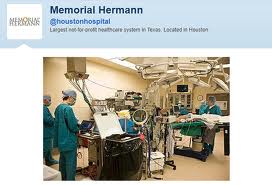
If you were on twitter today, you may have seen the hashtag #MHbrain.  That stood for Memorial Hermann-Texas Medical Center in Houston (@houstonhospital).  Today they live-tweeted a brain surgery which removed a cavernous angioma tumor from a 21-year-old female patient.

According to the hospital's press release, the goal of the "twittercast" was to (1) educate the public about brain tumors and (2) demystify brain surgery by giving a look inside an operating room.  The surgeon, Dr. Dong Kim, added "Someone may have a loved one who is considering a similar procedure and perhaps they can glean some information from this twittercast that may help them make a decision about whether surgery is the right choice for them."

In authentic social media style, the hospital did not just send out information and images. They also had another neurosurgeon, Dr. Scott Shepard, serve as an online moderator who could respond to questions and comments from twitter followers in real time.

While there was much excitement over this event today, it is not the first time we have heard about surgeons tweeting from the operating room.  Back in 2009, CNN picked up a story about surgeons at Henry Ford Hospital in Michigan tweeting the removal of a cancerous tumor from the kidney of a male patient.  Just last February, Memorial Hermann was in the news for the first live tweeted open heart surgery.

A few thoughts on this trend:

How is Memorial Hermann evaluating their twittercast efforts?  
  • Was this a huge marketing event or do they actually have health education goals?
  • Are they simply looking at the numbers?  For example, the number of twitter followers (up to 13,400 from 5,100 in the past 3 months).  Or the number of visitors to Storify, a site which archives both the heart and brain surgeries.
  • Are the demographics of twitter users reflective of their target audience?
  • I would hope that they are thinking about how to evaluate the goals they explicitly laid out in their press release.  How will they show that a twittercast can increase knowledge about brain tumors?  How will they show that the public or potential patients have less anxiety about the procedure or choose it more often?  As always, it is important to state goals (for any public health activity) that are measurable.  
How is social media a benefit/challenge for physicians?
  • I read an interesting blog post recently called, "Why social media may not be worth it for doctors."  The author was concerned about already burned-out doctors trying to learn and make time for ever-changing technology...with no guarantee that the technology will give them "return on investment".  Do the challenges outweigh the benefits?
  • If physicians view themselves as "educators", how much value could twitter bring?
Are there patient safety or confidentiality issues that should be considered?
  • Although the patient's name was protected and she gave permission for the twittercast, is it possible that any confidential information could be accidentally shared during the event?
  • Although safeguards are in place, errors do happen in the operating room and throughout the hospital.  With the additional staff/equipment (and possible distraction?) in the operating room to conduct the twittercast, could we face an increased risk of error?
What do you think?

Tuesday, May 1, 2012

Facebook Adds Organ Donation To Timeline: Should We "Like" It?

Typically, I post on Wednesdays.  However, with so much chatter about Facebook's announcement, this felt more timely.
Starting today, you can add your organ donation status to your Facebook timeline using the "share life" tool.  If you are already registered, you can share your story about where and why you decided to become an organ donor.  If you are interested in registering, you can follow links to official donor registries.

ABC has been a primary news source for this announcement, interviewing Facebook CEO Mark Zuckerberg, demonstrating how to use the "share life" tool, and discussing myths and facts about organ donation.

Scanning Facebook and Twitter today (especially among my public health colleagues), the response seems to be overwhelmingly positive.  From my perspective, the Facebook tool has the potential to be effective (i.e., increasing the number of registered donors) because it focuses on action.  The tool is not for education.  The tool actually links to registries so that you can sign up.  The tool aims to increase the visibility of already registered donors, which in turn will influence others to sign up.  The tool aims to decrease the stigma and secrecy of talking about end of life decisions by putting it right up there next to your birth date and relationship status.  This may also influence others to sign up.  In previous posts, I have written about public health campaigns that use social media in order to reduce the stigma around an "undesirable" topic (e.g., STD testing).

Although I am 100% supportive of the mission of increasing organ donors and am familiar with the dire need for donations (e.g., 18 people will die each day waiting for an organ), I have a few reservations about "share life":

In today's New York Times coverage of the Facebook announcement, I read a sentence that concerned me (I added the underlining):

"The company announced a plan on Tuesday morning to encourage everyone on Facebook to start advertising their donor status on their pages, along with their birth dates and schools — a move that it hopes will create peer pressure to nudge more people to add their names to the rolls of registered organ donors".

I consider declaration as an organ donor to be a medical decision.  In public health and medicine, we strive for patients and the public to make such decisions from a position that is informed and lacks pressure from physicians or family or friends.  Therefore, I have reservations about people signing up without educating themselves first and/or because they feel pressure on Facebook.  Just a few weeks ago, I posted about "hashtag activism" and how easy it has become to get involved in causes via social media.  Are we as thoughtful when we participate in causes on Facebook as when we participate in real life?

My other ongoing concern is regarding the proper security and use of personal information that is gathered by Facebook.  Will your organ donation status result in particular advertisements being sent your way?  I remember updating my Facebook status to "engaged" 4 years ago and being overwhelmed by the wedding planning advertisements on my page.  There is increasing public outcry regarding privacy settings and the personal information you enter being used for Facebook to attract advertisers and other business opportunities. 

Again, I am 100% supportive of the organ donation mission.  I think the reach of Facebook offers tremendous public health opportunities (including the possible elimination of long wait time for organs).  While that is an attractive outcome, we must always remember to focus on the ethics of the process as well.

What do you think?
  •  Facebook has become directly involved with several public health issues (e.g., suicide, bullying, organ donation).  Are their strategies effective?  Why or why not? 
  • Do you foresee any unintended consequences from the organ donation tool?
  • Will you include your organ donation status on your Facebook timeline?  Why or why not?