Showing posts with label FDA. Show all posts

Monday, September 16, 2013

An Open Letter to David Bates, MD, Chair, ONC FDASIA Health IT Policy Committee on Recommendations Against Premarket Testing and Validation of Health IT

From http://www.healthit.gov/policy-researchers-implementers/federal-advisory-committees-facas/fdasia:

The Food and Drug Administration Safety Innovation Act (FDASIA) Health IT Policy Committee Workgroup is charged with providing expert input on issues and concepts identified by the Food and Drug Administration (FDA), Office of the National Coordinator for Health IT (ONC), and the Federal Communications Commission (FCC) to inform the development of a report on an appropriate, risk-based regulatory framework pertaining to health information technology including mobile medical applications that promotes innovation, protects patient safety, and avoids regulatory duplication.

My Open Letter to the Committee's chair speaks for itself:

From: Scot Silverstein
Date: Mon, Sep 16, 2013 at 9:39 AM
Subject: ONC FDASIA Health IT Policy Committee's recommendations on Premarket Surveillance
To: David Bates

Sept. 16, 2013

David Bates, Chair, ONC FDASIA Health IT Policy Committee
via email
   
Dear David,

I am disappointed (and in fact appalled) at the ONC FDASIA Health IT Policy Committee's recommendations that health IT including typical commercial EHR/CPOE systems not be subjected to a premarket testing and validation process.  I believe this recommendation is, quite frankly, negligent. [1]

As you know, my own mother was injured and then died as a result of EHR deficiencies, and nearly injured or killed again in the recuperation period from her initial injuries by more health IT problems in a second EHR used in her care.  In my legal consulting and from my colleagues, as well as from the literature, I hear about other injuries/deaths and many "near misses" as well.  That your recommendations came in the face of the recent ECRI Deep Dive study is even more appalling, with the latter's finding of 171 health IT-related incidents in 9 weeks from 36 member PSO hospitals, resulting in 8 injuries and 3 possible deaths, all reported voluntarily. [2]

It is my expert opinion the issues that cause these outcomes would never have made it into production systems, had a reasonable, competent, unbiased premarket testing and validation process been in place.

Consequently, I have shared the FDASIA HIT Policy Committee's recommendations with the Plaintiff's Bar, and will use its recommendations in my presentations to various chapters of the American Association for Justice (the trial lawyer's association) - as well as to interested Defense attorneys so they may advise their clients accordingly.

I am also making recommendations that in any torts, individual or class, regarding EHR problems that would likely have been averted with competent premarket testing and validation, that the FDASIA HIT Policy Committee members who agreed with the recommendation be considered possible defendants.

I am sorry it has come to this.

Please note I am also posting this message for public viewing at the Healthcare Renewal weblog of the Foundation for Integrity and Responsibility in Medicine (FIRM).

Sincerely,

Scot Silverstein, MD
Consultant/Independent Expert Witness in Healthcare Informatics
Adjunct Faculty, Drexel University, College of Computing and Informatics

Notes:


[1] FDA Law Blog, Recommendations of FDASIA Health IT Workgroup Accepted, September 11, 2013, available at http://www.fdalawblog.net/fda_law_blog_hyman_phelps/2013/09/recommendations-of-fdasia-health-it-workgroup-accepted.html: "Of particular interest is the recommendation that health IT should generally not be subject to FDA premarket requirements, with a few exceptions:  medical device accessories, high-risk clinical decision support, and higher risk software use cases."

[2] "Peering Underneath the Iceberg's Water Level: AMNews on the New ECRI 'Deep Dive' Study of Health IT Events" , Feb. 28. 2013, available at http://hcrenewal.blogspot.com/2013/02/peering-underneath-icebergs-water-level.html.

-----------------------------------------------

Note: the following are listed on the linked site above as members of the committee:

Member List
  • David Bates, Chair, Brigham and Women’s Hospital
  • Patricia Brennan, University of Wisconsin-Madison
  • Geoff Clapp, Better
  • Todd Cooper, Breakthrough Solutions Foundry, Inc.
  • Meghan Dierks, Harvard Medical Faculty, Division of Clinical Informatics
  • Esther Dyson, EDventure Holdings
  • Richard Eaton, Medical Imaging & Technology Alliance
  • Anura Fernando, Underwriters Laboratories
  • Lauren Fifield, Practice Fusion, Inc.
  • Michael Flis, Roche Diagnostics
  • Elisabeth George, Philips Healthcare
  • Julian Goldman, Massachusetts General Hospital/ Partners Healthcare
  • T. Drew Hickerson, Happtique, Inc.
  • Jeffrey Jacques, Aetna
  • Robert Jarrin, Qualcomm Incorporated
  • Mo Kaushal, Aberdare Ventures/National Venture Capital Association
  • Keith Larsen, Intermountain Health
  • Mary Anne Leach, Children’s Hospital Colorado
  • Meg Marshall, Cerner Corporation
  • Mary Mastenbrook, Consumer
  • Jackie McCarthy, CTIA - The Wireless Association
  • Anna McCollister-Slipp, Galileo Analytics
  • Jonathan Potter, Application Developers Alliance
  • Jared Quoyeser, Intel Corporation
  • Martin Sepulveda, IBM
  • Joseph Smith, West Health
  • Paul Tang, Palo Alto Medical Foundation
  • Bradley Thompson, Epstein Becker Green, P.C
  • Michael Swiernik, MobileHealthRx, Inc.
Federal Ex Officios
  • Jodi Daniel, ONC
  • Bakul Patel, FDA
  • Matthew Quinn, FCC

 -- SS

Friday, August 9, 2013

A War on Patients: Panel Says EHRs Should Not Be Vetted Before Marketing and Deployment

"First, do harm - it's a learning experience, and injured or dead patients are just a bump in the road, anyway" - the apparent creed of the healthcare computing hyperenthusiasts

Joe Conn and Modern Healthcare published the following article:

Work group says OK to some HIT safety regs (link), Joe Conn, Modern Healthcare, Aug. 7, 2013

What is important is what safety regs the Workgroup said "no" to.  It comes as no surprise:
A federally chartered special work group with representatives from three federal agencies has submitted its draft recommendations on establishing a regulatory framework for health information technology. Chief among those recommendations is that health IT should not be subjected to pre-market federal regulation, but there were a few exceptions.

The exceptions are narrow, and are likely already covered as Class III medical devices by FDA (see http://www.fda.gov/MedicalDevices/DeviceRegulationandGuidance/Overview/ClassifyYourDevice/):

The exceptions under which there should be FDA regulation, according to the work group, include medical device accessories to be defined as such by the FDA; certain forms of “high risk” clinical decision support systems, such as “computer aided diagnostics,” also to be defined by the FDA; and some “higher risk software” use cases to be defined by the committee's own safety work group.

They did acknowledge the need for postmarket surveillance:
... The group also recommended: developing a federally supported, post-market surveillance system for health IT products “to ensure safety-related decision support is in place,” creating a process for gathering information on safety issues, aggregated at the federal level and establishing a public process for “customer rating of HIT to enhance transparency.”

Dr. David Bates [a professor at Harvard Medical School], chairman of the Food and Drug Administration Safety Innovation Act work group, presented the preliminary findings Wednesday at a meeting of HHS' Health Information Technology Policy Committee.

Let me translate this to plain English:  the health IT systems that go in (and their upgrades and patches) are recommended to be free from pre-marketing regulation and regulatory vetting.  Patients are to be the guinea pigs for testing of the software.  

If patients are harmed or killed, they get the honor of being named as "postmarket surveillance learning cases" who gave their all for the betterment of healthcare information technology.  

(Without their consent, but who needs consent to test experimental and unvetted devices on guinea pigs?)

Bates did express some liability concerns:

Asked during a question and answer period following his presentation whether the committee had considered the liability implications of its recommendations, Bates said, “It's not something we discussed at length, but it's something we can discuss over the next month.”

I, on the other hand, as a legal consultant on health IT-related medical errors and evidence tampering, am considering liability issues.

Unfortunately, patients would rather be whole than in lawsuits (or dead).  Also, sadly, it's physicians and nurses who will bear the brunt, if not all, of the liability for bad outcomes due to defective IT such as at these two recent posts, with vendor alerts regarding serious flaws of medication and other orders not being retained:

A clarification for all those proletarians who lack Harvard educations, and for the Workgroup members as well. Allow me to point out that the above manufacturer safety alerts of life-threatening fundamental flaws (involving entered text that "disappears", apparently found in live-patient scenarios, and the other "glitches" that did cause life-threatening errors sometimes en masse involving thousands of patients such as another apparent Siemens debacle at http://hcrenewal.blogspot.com/2011/11/lifespan-rhode-island-yet-another.html) would likely not have occurred if the systems had been vetted before being turned loose on patients.

Finally:  David and panel members, my mother and I thank you profusely. 

Oh wait...my mother can't thank you, she's dead from the toxic effects of un-premarket-vetted health IT on simple care processes at the very hospital where I performed my residency two decades ago.

She might have died a few times before she actually did thanks to other IT "glitches" that cropped up during her recovery from the first one, but I was able to (in one case, by sheer happenstance of showing up at  the right time) discover or provide staff with information to work around additional unvetted-health-IT flaws before those did her in.

It's taken more than a decade for critical-thinking, unconflicted writers and researchers ("iconoclasts") to force cybernetics-over-all hyperenthusasts (see here) like Bates and his panel members to own up the risks of health IT at all, e.g. via sites like this blog and this teaching site. These panel members IMO have their heads buried in sand.

Dr. Bates and his panel are, in my opinion, healthcare IT extremists, which is in part the apparent holding of the belief that computers have more rights than patients - and the other beliefs mentioned in this post:  "Another Health IT 'Glitch' - Can Digital Disappearing Ink Kill Patients?" at http://hcrenewal.blogspot.com/2013/08/another-health-it-glitch-can.html.

-- SS

Wednesday, August 7, 2013

Health Care Revolving Door Roundup

Increasingly, the regulatory and law enforcement functions of the US government in the health care sphere seem to be blending with the management of large health care organizations.  One mechanism for this is the "revolving door," the constant interchange of personnel between government agencies and corporate management. 


Here is a list of some of this year's interesting cases of people transiting the revolving door between US government agencies that are supposed to regulate health care organizations or enforce the relevant laws and the organizations subject to these regulations and laws.   Note that this list may not be complete.  It is difficult to keep track of these transitions. 

Leader of Health Care Fraud Section of Philadelphia US Attorney's Office to Teva Pharmaceuticals

Via MainJustice.org in March, 2013,

John Pease, who led the government and health care fraud section in the U.S. Attorney's Office in Philadelphia, has left the Justice Department for a job with a pharmaceutical company.

Pease, 45, is a new senior counsel at Teva Pharmaceuticals, where he oversees government investigations of the company for the Americas.  'I was just ready to try something different,' Pease said in an interview.

 Leader of US Department of Justice Fraud Section in Charge of Health Care Issues to Law Firm as Defender of Companies and Senior Executives

The initial notice again was via MainJustice.org in March, 2013

Sam Sheldon, the deputy chief in the Criminal Division's Fraud Section who oversaw health care fraud prosecutions, is leaving the Justice Department to join Quinn Emanuel Urquhart & Sullivan LLP.


Mr Sheldon's new job was made clear on the firm's website,

Sam Sheldon is head of the firm’s Health Care Practice Group.  He is a trial lawyer who represents companies and senior executives in litigation before the United States federal government including Department of Justice and Department of Health and Human Services, and other law enforcement and regulatory agencies.

FDA Deputy Commissioner for Global Regulatory Operations and Policy to Mylan

This story, in April, actually made it (briefly) to Reuters,

 Generic drugmaker Mylan Inc said on Tuesday it hired Deborah Autor, deputy commissioner for global regulatory operations and policy at the U.S. Food and Drug Administration, to help oversee its global regulatory strategy.

Leader of Health Care Fraud Enforcement of Philadelphia US Attorney's Office to Law Firm as Industry Defender

From Bloomberg, in August, 2013,

Marilyn May, a False Claims Act litigator at the U.S. Justice Department, joined Arnold & Porter LLP’s Washington office as litigation counsel with a focus on healthcare, pharmaceutical and medical device industry defense work. 

May was the head of healthcare fraud enforcement in the U.S. Attorney’s Office in the Eastern District of Pennsylvania. She coordinated healthcare fraud cases and investigations as well as handled False Claims Act cases involving pharmaceutical and medical device companies, hospitals, nursing homes and other healthcare providers, the firm said. 

The law firm's website states,

 Her litigation practice focuses on pharmaceutical, medical device and healthcare defense matters.


Summary

In each of these cases, a person with responsibility for regulation of and/or law enforcement for health care organizations went through the revolving door to either work for health care corporations subject to such regulation and/or law enforcement, or work for legal firms that specialize in defending such corporations and their leaders in regulatory and law enforcement actions.

As far as I know, none of these instances was the least bit illegal.  However, like previous examples of the revolving door, they raise the concern that people in government regulation or law enforcement who think that they may have future lucrative job prospects helping health care organizations attenuate regulation and law enforcement may not be the most enthusiastic, aggressive, or persistent regulators or law enforcers.  Why would one want to upset one's future employer?

While these cases of the revolving door are legal, they are clearly conflicts of interest in the sense that the prospect of such future employment likely may increase the risk of compromising a government official's devotion to serving the public and enforcing the law, if not in the legal sense.  In some particular case, the revolving door may actually lead to corruption according to the Transparency International definition, abuse of entrusted power for private gain, if not according to the legal definition.  Thus the continuing occurrence of government officials blithely transiting the revolving door no doubt was a reason that more than 40% of the public consider the US health care sector to be corrupt (see this post.)

True health care reform would require curtailing the severe sorts of conflicts of interest created by the revolving door.  This might require both improving pay and working conditions for government regulators and law enforcers, and specific laws to prevent immediate transitions from being a regulator/ law enforcer to handling corporate responses to or defenses of such regulation and enforcement.

Of course, I can already hear the protests of those people who decry paying more for government or increasing government regulation.  I can at least hope that the protests are not from those who personally profit from the current seemingly corrupt system.  


Tuesday, July 2, 2013

Is ONC's definition of "Significant EHR Risk" when body bags start to accumulate on the steps of the Capitol?

In a June 25, 2013 Bloomberg News article "Digital Health Records’ Risks Emerge as Deaths Blamed on Systems" by technology reporter Jordan Robertson (http://go.bloomberg.com/tech-blog/author/jrobertson40/), an EHR-harms case in which I am (unfortunately) intimately involved as substitute plaintiff is mentioned:

When Scot Silverstein’s 84-year-old mother, Betty, starting mixing up her words, he worried she was having a stroke. So he rushed her to Abington Memorial Hospital in Pennsylvania.

After she was admitted, Silverstein, who is a doctor, looked at his mother’s electronic health records, which are designed to make medical care safer by providing more information on patients than paper files do. He saw that Sotalol, which controls rapid heartbeats, was correctly listed as one of her medications.

Days later, when her heart condition flared up, he re-examined her records and was stunned to see that the drug was no longer listed, he said. His mom later suffered clotting, hemorrhaged and required emergency brain surgery. She died in 2011. Silverstein blames her death on problems with the hospital’s electronic medical records.

“I had the indignity of watching them put her in a body bag and put her in a hearse in my driveway,” said Silverstein, who has filed a wrongful-death lawsuit. “If paper records had been in place, unless someone had been using disappearing ink, this would not have happened.”

How can I say that?  Because I trained in this hospital and worked as resident Admitting Officer in that very ED pre-computer.  The many personnel in 2010 who were given the meds history by my mother and myself directed it not to paper for others to see, but to /dev/null.

Why can I say that?  Because the hospital's Motion for Prior Restraint (censorship) against me was denied outright by the presiding judge just days before the Bloomberg article was published (http://en.wikipedia.org/wiki/Prior_restraint):

Prior restraint (also referred to as prior censorship or pre-publication censorship) is censorship imposed, usually by a government, on expression before the expression actually takes place. An alternative to prior restraint is to allow the expression to take place and to take appropriate action afterward, if the expression is found to violate the law, regulations, or other rules.

Prior restraint prevents the censored material from being heard or distributed at all; other measures provide sanctions only after the offending material has been communicated, such as suits for slander or libel. In some countries (e.g., United States, Argentina) prior restraint by the government is forbidden, subject to certain exceptions, by a constitution.

Prior restraint is often considered a particularly oppressive form of censorship in Anglo-American jurisprudence because it prevents the restricted material from being heard or distributed at all. Other forms of restrictions on expression (such as actions for libel or criminal libel, slander, defamation, and contempt of court) implement criminal or civil sanctions only after the offending material has been published. While such sanctions might lead to a chilling effect, legal commentators argue that at least such actions do not directly impoverish the marketplace of ideas. Prior restraint, on the other hand, takes an idea or material completely out of the marketplace. Thus it is often considered to be the most extreme form of censorship.

The First Amendment lives.

(I wonder if it irks the hospital that they cannot perform sham peer review upon me now that the censorship motion is denied.  Sham peer review is a common reaction by hospital executives to "disruptive" physicians, but I have not worked there since 1987 and I no longer practice medicine.)

In the Bloomberg story Mr. Robertson wrote:

... “So far, the evidence we have doesn’t suggest that health information technology is a significant factor in safety events,” said Jodi Daniel (http://www.healthit.gov/newsroom/jodi-daniel-jd-mph), director of ONC’s office of policy and planning. “That said, we’re very interested in understanding where there may be a correlation and how to mitigate risks that do occur.”

In my opinion this statement represents gross negligence by a government official.  Ms. Daniel is unarguably working for a government agency pushing this technology.   She makes the claim that "so far the evidence we have doesn't suggest significant risk" while surely being aware (or having the fiduciary responsibility to be aware) of the impediments to having such evidence.

From my March 2012 post "Doctors and EHRs: Reframing the 'Modernists v. Luddites' Canard to The Accurate 'Ardent Technophiles vs. Pragmatists' Reality" at http://hcrenewal.blogspot.com/2012/03/doctors-and-ehrs-reframing-modernists-v.html  (yes, this was more than a year ago):

... The Institute of Medicine of the National Academies noted this in their late 2011 study on EHR safety:


... While some studies suggest improvements in patient safety can be made, others have found no effect. Instances of health IT–associated harm have been reported. However, little published evidence could be found quantifying the magnitude of the risk.

Several reasons health IT–related safety data are lacking include the absence of measures and a central repository (or linkages among decentralized repositories) to collect, analyze, and act on information related to safety of this technology. Another impediment to gathering safety data is contractual barriers (e.g., nondisclosure, confidentiality clauses) that can prevent users from sharing information about health IT–related adverse events. These barriers limit users’ abilities to share knowledge of risk-prone user interfaces, for instance through screenshots and descriptions of potentially unsafe processes. In addition, some vendors include language in their sales contracts and escape responsibility for errors or defects in their software (i.e., “hold harmless clauses”). The committee believes these types of contractual restrictions limit transparency, which significantly contributes to the gaps in knowledge of health IT–related patient safety risks. These barriers to generating evidence pose unacceptable risks to safety.[IOM (Institute of Medicine). 2012. Health IT and Patient Safety: Building Safer Systems for Better Care (PDF). Washington, DC: The National Academies Press, pg. S-2.]

Also in the IOM report:

… “For example, the number of patients who receive the correct medication in hospitals increases when these hospitals implement well-planned, robust computerized prescribing mechanisms and use barcoding systems. But even in these instances, the ability to generalize the results across the health care system may be limited. For other products— including electronic health records, which are being employed with more and more frequency— some studies find improvements in patient safety, while other studies find no effect.

More worrisome, some case reports suggest that poorly designed health IT can create new hazards in the already complex delivery of care. Although the magnitude of the risk associated with health IT is not known, some examples illustrate the concerns. Dosing errors, failure to detect life-threatening illnesses, and delaying treatment due to poor human–computer interactions or loss of data have led to serious injury and death.”


I also noted that the 'impediments to generating evidence' effectively rise to the level of legalized censorship, as observed by Koppel and Kreda regarding gag and hold-harmless clauses in their JAMA article "Health Care Information Technology Vendors' Hold Harmless Clause: Implications for Patients and Clinicians", JAMA 2009;301(12):1276-1278. doi: 10.1001/jama.2009.398.

FDA had similar findings about impediments to knowledge of health IT risks, see my Aug. 2010 post "Internal FDA memorandum of Feb. 23, 2010 to Jeffrey Shuren on HIT risks. Smoking gun?" at http://hcrenewal.blogspot.com/2010/08/smoking-gun-internal-fda-memorandum-of.html.

I also note this from amednews.com's coverage of the ECRI Deep Dive Study (http://hcrenewal.blogspot.com/2013/02/peering-underneath-icebergs-water-level.html):


... In spring 2012, a surgeon tried to electronically access a patient’s radiology study in the operating room but the computer would show only a blue screen. The patient’s time under anesthesia was extended while OR staff struggled to get the display to function properly. That is just one example of 171 health information technology-related problems reported [voluntarily] during a nine-week period [from 36 hospitals] to the ECRI Institute PSO, a patient safety organization in Plymouth Meeting, Pa., that works with health systems and hospital associations in Kentucky, Michigan, Ohio, Tennessee and elsewhere to analyze and prevent adverse events. Eight of the incidents reported involved patient harm, and three may have contributed to patient deaths, said the institute’s 48-page report, first made privately available to the PSO’s members and partners in December 2012. The report, shared with American Medical News in February, highlights how the health IT systems meant to make care safer and more efficient can sometimes expose patients to harm.


One wonders if Ms. Daniels' definition of "significant" is when body bags start to accumulate on the steps of the Capitol.

I also note she is not a clinician but a JD/MPH.

I am increasingly of the opinion that non-clinicians need to be removed from positions of health IT leadership at regional and national levels.

In large part many just don't seem to have the experience, insights and perhaps ethics necessary to understand the implications of their decisions.

At the very least, such people who never made it to medical school or nursing school need to be kept on a very short leash by those who did.

-- SS

Tuesday, May 14, 2013

Six Years Later, Ranbaxy - Oops, Daiichi Sankyo - Pleads Guilty to Adulteration, Pays $500 Million

It only took until 2013, but the US Food and Drug Administration finally secured guilty pleas and fines.  The basics are in an Associated Press story (via the Washington Post):

 A subsidiary of India’s largest pharmaceutical company has agreed to pay a record $500 million in fines and penalties for selling adulterated drugs and lying to federal regulators in a case that is part of an ongoing crackdown on the quality of generic drugs flowing into the U.S.

Federal prosecutors say the guilty plea by Ranbaxy USA Inc. represents the largest financial penalty against a generic drug company for violations of the Federal Food, Drug and Cosmetic Act, which prohibits the sale of impure drugs.

Note that the company pleaded guilty to criminal charges.

 The subsidiary of Ranbaxy Laboratories Limited pleaded guilty to federal criminal charges and the company separately agreed to resolve civil claims with all 50 states and the District of Columbia. The company had earlier set aside $500 million to cover potential criminal and civil liability stemming from the Justice Department investigation.

It admitted as part of the deal that it sold adulterated batches of drugs — including an antibiotic and generic versions of medications used to treat severe acne, epilepsy and nerve pain — that were developed at two manufacturing sites in India. 

Ironies

Note that this resolution has certain ironies.

Lateness

There is a saying that justice delayed is justice denied.  Note that it took six years to obtain the guilty pleas.  As noted by the AP,

 The problems were largely revealed by a whistleblower in a federal lawsuit filed in Maryland in 2007. 

Ambiguities about Responsibility

First, note that while all the headlines are about Ranbaxy, Ranbaxy is not really an independent company.  As reported by Reuters (and only by Reuters so far as I can tell at this time),

Ranbaxy ... [is] majority-owned by Japan's Daiichi Sankyo.

Second, as per the AP, see the comment made by the Ranbaxy CEO,

'While we are disappointed by the conduct of the past that led to this investigation, we strongly believe that settling this matter now is in the best interest of all of Ranbaxy’s stakeholders; the conclusion of the DOJ investigation does not materially impact our current financial situation or performance,' Ranbaxy CEO and managing director Arun Sawhney said in a statement.

Maybe there was something lost in translation, but the CEO certainly spoke as if someone else was responsible for the "conduct of the past."  Incidentally, it does not appear that so far any journalist has even sought comment from the people really in charge, at Daiichi Sankyo.

Third, just like many other cases we have reported before, no individual, especially anyone who authorized, directed, or implemented the bad behavior, was held legally responsible.  The cost of the fines will no doubt be spread among the corporate structures involved.  Since a company pleaded guilty, no individual pays a fine, much less goes to jail.

It does appear that when the settlement was first announced in 2011, a cut in compensation for top executives of Daiichi Sankyo was announced, but the cuts were temporary, and apparently in response to the immediate financial consequences of the settlement, not any larger implications.  See Bloomberg's report:

 Chief Executive Officer Joji Nakayama and board members will receive 5 percent to 30 percent less compensation for six months in response to the cut in the earnings forecast, Daiichi Sankyo said today. The company has lost about half its market value since agreeing to buy a majority stake in Ranbaxy, India's largest drugmaker, in June 2008. 

 The Contrast with the Case of the Adulterated Heparin

Note that in this case, there have been no allegations that patients were harmed by the admitted adulteration,  Per the AP:

 It’s not known whether the problems with the drugs led to any health issues.... The government’s allegations against the company make no claims that the drugs, whose strength, purity or quality differed from the specifications, harmed anyone.


In 2008, we began blogging about how  US patients started to get sick and die after being infused with heparin, the common anti-coagulant drug. As we have discussed repeatedly  (look here, and see the summary at the end of the post), Baxter International was selling contaminated heparin under its label which was made in unregulated workshops in China, and then transmitted through a complex chain of Chinese and US companies.

The AP article stated,

 The case comes as federal regulators and prosecutors focus attention on the quality of ingredients of generics and other drugs manufactured overseas, said Allan Coukell, an expert on drug safety at The Pew Charitable Trusts. He said the 2008 deaths linked to tainted batches of the blood-thinner heparin that were imported from China served as a 'wake up call' about just how much of the nation’s drug supply comes from overseas.

So perhaps this wake up call helped propel the current case against Ranbaxy, that is, Daiichi Sankyo.  However, since 2008, if there has been a criminal investigation of the tainted heparin, which appears to have been much more consequential, sometimes fatally so, to patients, the results have not been made public.  A cynic might note that the contaminated heparin was sold by a US based manufacturer of branded pharmaceuticals, not a foreign based manufacturer of generic drugs.

Summary

The most fundamental obligation of a drug company is to produce pure, unadulterated drugs.  The first attempts to regulate the drug industry in the US were meant to ensure that these companies fulfilled this obligation.  Yet now there is increasing evidence that the contemporary pharmaceutical industry has trouble with this most basic responsibility. 

As we discussed here, the managers of pharmaceutical companies have been swept up in a dominant business management fad, outsourcing, as a means to cut costs to the bone.  (It seems that most health care managers are also caught up in the larger rage for financialization, to emphasize short term revenue over all other concerns, including patients' and the public's health.)  As the New York Times reported  re the Ranbaxy case,


Others say the company’s problems highlight how little oversight federal drug safety officials have of overseas plants. Studies that have shown the F.D.A. inspects foreign generic manufacturing plants about once every seven to 13 years, compared with once every two years for domestic manufacturers. A law passed last year will eventually require the F.D.A. to apply the same standards when inspecting all manufacturing plants, regardless of location. But some worry that federal budget cuts are slowing the adoption of that law. 

'They just happened to stumble across the Ranbaxy problem at those two plants in India,' said Joe Graedon, a pharmacologist who runs a consumer Web site, the People’s Pharmacy, which has raised questions about the safety of generic drugs. 'Ranbaxy was the biggest and one of the best in India. What about all the smaller ones? What does that say about them?'

Again, all pharmaceutical companies, not just generic drug manufacturers, have seen fit to outsource much, if not most of their production.

In our rush to market fundamentalism, we seem to have deregulated, at least de facto, most aspects of health care.  We now cannot trust the drugs we take to have been made by the companies whose labels they bear, or to be pure.  We now cannot trust that regulators will find that out, or having found that out, will do anything about it in a timely manner. 

To repeatedly reiterate, as long as the leaders of health care organizations are not held accountable for the results of their decisions on health care quality, cost, and access (even in such extreme quality violations as those resulting in multiple patient deaths), we can expect continuing decisions that sacrifice quality, increase costs, and worsen access, but that are in the self-interest of the people making them.

To really reform health care, we must hold health care organizations and their leaders accountable (and not blame all the problems on doctors, other health care professionals, patients, and society at large).

- Roy M. Poses MD for Health Care Renewal 


Appendix - Heparin Case Summary

- We have posted several times, recently here about the tragic case of suddenly allergenic heparin. Although heparin, an intravenous biologic anti-coagulant, has been in use for over 70 years, serious allergic reactions to it had heretofore been rare. Starting late in 2007, hundreds of such reactions, and 21 deaths were reported in the US after intravenous heparin infusions.All the heparin related to these events in the US was made by Baxter International.

- We then learned that although the heparin carried the Baxter label, it was not really made by Baxter. The company had outsourced production of the active ingredient to a long, and ultimately mysterious supply chain. Baxter got the active ingredient from a US company, Scientific Protein Laboratories LLC, which in turn obtained it from a factory in China operated by Changzhou SPL, which in turn was owned by Scientific Protein Laboratories and by Changzhou Techpool Pharmaceutical Co. Changzhou SPL, in turn, got it from several consolidators or wholesalers, who in turn got it from numerous small, unidentified "workshops," which seemed to produce the product in often primitive and unsanitary conditions. None of the stops in the Chinese supply chain had apparently been inspected by the US Food and Drug Administration nor its Chinese counterpart. (See posts here and here.)

- We found out that the Baxter International labelled heparin was contaminated with over-sulfated chondroitin sulfate, a substance not found in nature, but which mimics heparin according to the simple laboratory tests used in the Chinese facilities to check incoming heparin. (See post here.) Further testing revealed that the contamination seemed to have taken place in China prior to the provision of the heparin to Changzhou SPL. (See post here.) It is not clear whether Baxter International or Scientific Protein Laboratories had inspected most of the steps in the supply chain, or even knew what went on there.

- The Baxter and Scientific Protein Laboratories CEOs did not seem aware of where they got the heparin on which the Baxter International label was eventually affixed. But one report in the New York Times alleged that Scientific Protein Laboratories would not pay enough for heparin to satisfy any sources other than the small "workshops."

- Leaders of all organizations involved, Baxter International, Scientific Protein Laboratories, Changzhou SPL, the Chinese government, and the US Food and Drug Administration, and the US Congress assigned blame to each other, but none took individual or organizational responsibility. (See post here.)  Note that SPL was recently bought out and taken private, making its current leadership even less transparent (see post here).  A 2010 inspection of an SPL facility by the FDA revealed ongoing manufacturing problems (see post here).

- Researchers (who turned out to have financial ties to a company which is developing an anti-coagulant drug that could compete with the heparin made by Baxter International) investigated the biological mechanisms by which the contamination of the heparin lead to adverse effects, but no one investigated further how the contamination occurred, or who was responsible. (See post here.)

- Hundreds of lawsuits against Baxter have now been filed, so far without resolution. (See post here.)  Efforts to make documents to be used in these cases public so far have not succeeded (see post here).

- A government report which attracted little attention warned of the dangers of pharmaceutical ingredients made in China and subject to virtually no oversight. (See post here.)

-  Despite requests from the US, the Chinese government did not investigate the production of the heparin that lead to the deaths (see post here.)

-  In February, 2011, a congressional investigation of the case was announced, but results are so far unavailable (see post here.)

-  In June, 2011, a jury returned the first verdict in a civil case about the contaminated heparin, awarding money from Baxter International and Scientific Protein Laboratories to the estate of a man who apparently died due to tainted heparin (see post here).

-  If there was a criminal investigation of the case, its results have not yet appeared. 

Monday, November 15, 2010

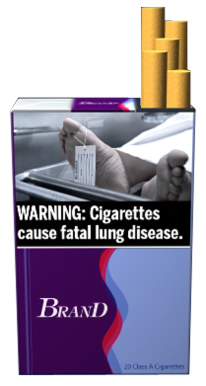
No Matter How Graphic The Images, Fear Based Messages Will Continue To Be Ineffective For Prevention

All over the news in the past week, we have seen samples of the new graphic images being proposed for addition to cigarette packages. They include corpses and people dying of cancer. However, just because these images and warnings are larger and more graphic, does not mean that they will be effective in smoking prevention.

A story ran today on Boston.com called "Will graphic cigarette warnings help- or hurt?" Two experts in tobacco prevention are quoted regarding their concerns about the new images. Gregory Connelly of the Harvard School of Public Health points to the results coming from Canada after using similar images. Smokers there simply purchased sleeves to cover up the images on their cigarette packs. Also, the smoking rate did not go down. The second expert is a wonderful professor of mine from the Boston University School of Public Health, Dr. Michael Siegel. Dr. Siegel writes regularly regarding this topic on his blog, "The Rest of the Story: Tobacco Analysis and Commentary". In the Boston.com article, he states "I do not actually think it's going to have much of an impact". His argument- the images are too late. The smokers are seeing the images after they have already purchased cigarettes. And (drum roll please....) people already know smoking is bad for them.

As someone who grew up during the "This is your brain. This is your brain on drugs. Any questions?" era...I wonder why we have not made much progress since then? Numerous studies have shown that scare tactics (or fear appeals) are not effective for preventing or producing sustained reductions of Alcohol, Tobacco, or other Drug use among youth. In addition to the issues outlined above, there is another problem with the fear based approach:

Although the fear based messages may increase knowledge (e.g., if they did not know it already, smokers will learn that cigarettes are bad for them from the graphic images)- knowledge does not equal behavior change. Especially when you are dealing with an addictive behavior. Addictive behaviors like smoking and drug use are impacted by much more than a rational weighing of pros and cons. There is the biological component of addiction, local-state-national prevention policies, social norms around the behavior, consequences experienced (or not experienced), ease of access to the substance, social support for quiting, money to support the addiction, etc. As you can see, knowledge alone will not change this kind of complex behavior.

Many of the most successful prevention strategies around this and other public health issues will continue to be a refocus from increasing individual knowledge to changing an environment that supports the behavior. In other words, laws that create smoke-free workplaces and crack down on establishments that sell cigarettes to underage kids will always be more effective at keeping the population healthy versus trying to educate (or scare) one individual at a time.